
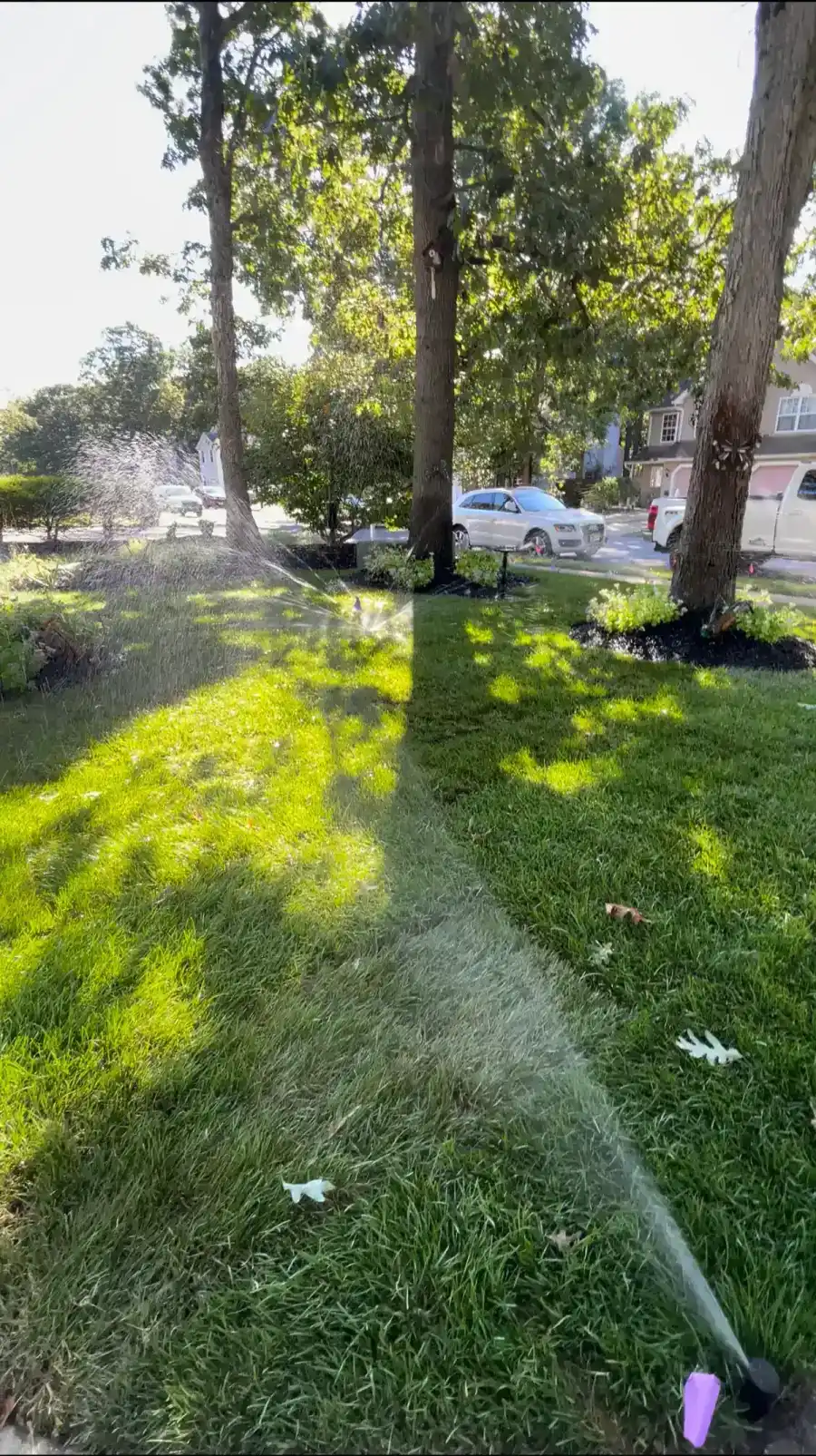
Use the Hottest Weeks as a System Check
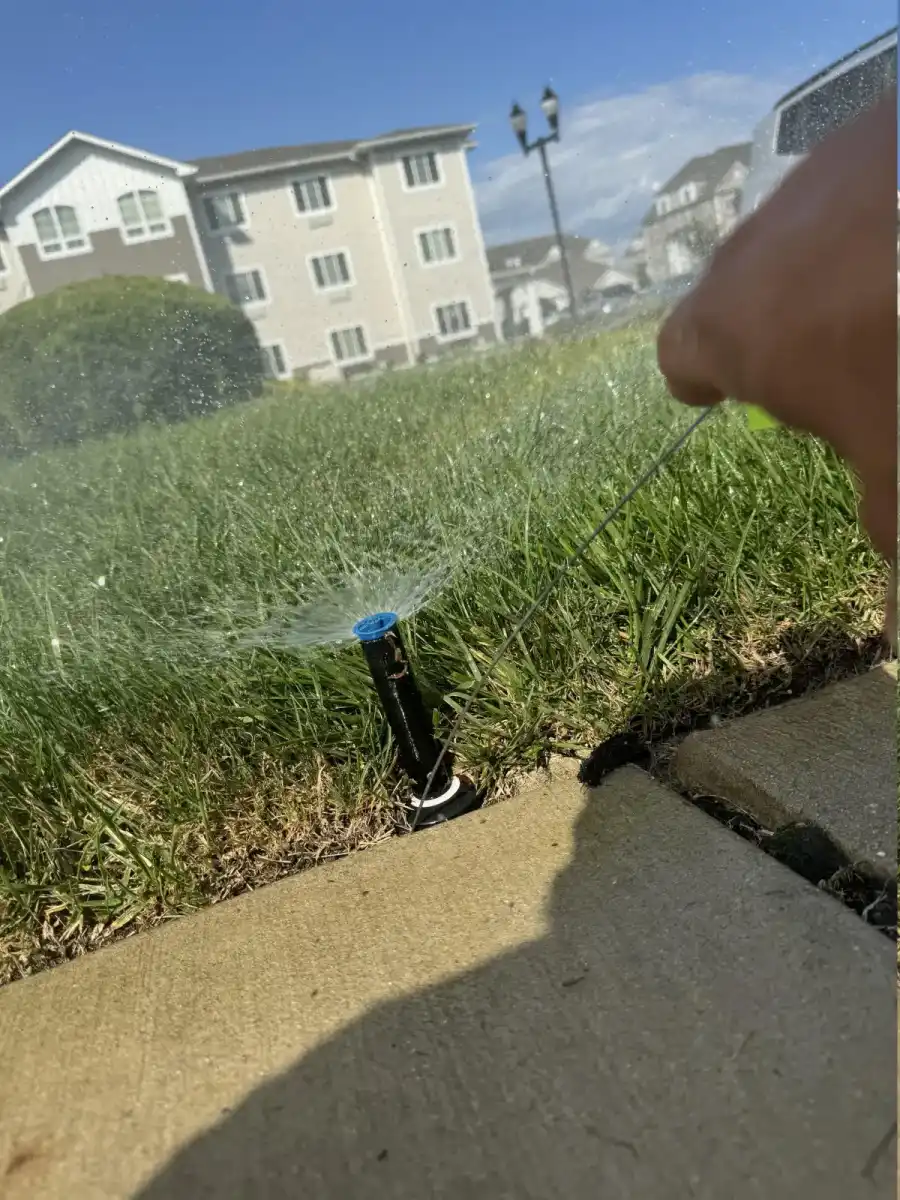
By mid-summer, a sprinkler system has been operating long enough for weak coverage and scheduling problems to become visible. Hot, bright weather also raises the cost of ignoring a tilted head, a blocked arc, a small leak, or a zone still using its mild spring settings.
This is the right time for a focused tune-up, not a property-wide runtime increase. Irrigation Innovations provides irrigation maintenance and sprinkler service across Gloucester County for systems that need adjustment or repair.
Run an Early-Morning Zone Walk
Choose a time when the spray is easy to see and run every zone in sequence. Watch for heads that do not rise, rotors that stall, misting, weak arcs, leaks around a head, and water landing on pavement. Check planting beds for spray blocked by summer growth.
Make a short list by station number or yard area. “Zone 3 is weak along the driveway” is more useful than a general note that the lawn looks dry.
Raise and Re-Aim Heads Hidden by Summer Growth
Grass, shrubs, and perennials are taller in July than they were during spring start-up. A spray pattern that cleared the landscape in April may now be blocked. Heads can also settle below grade or tilt after soil movement and mowing traffic.
Clearing an obstruction or adjusting an arc may restore coverage. Broken bodies, leaking seals, clogged nozzles, and damaged risers call for sprinkler repair rather than a longer schedule.
Reset the Controller for Current Conditions
Review each station instead of applying the same runtime everywhere. Full-sun turf, shaded grass, slopes, and drip zones lose water at different rates. Multiple shorter cycles can help a slope or heavier soil absorb water with less runoff.
Also check for duplicate start times, a disabled rain sensor, or a seasonal adjustment left too high. A smart irrigation system can make weather-based changes easier when the zones and equipment are already working correctly.
Look for Water Waste at the Edges
Driveways, sidewalks, fences, curb lines, and siding make overspray easy to spot. A small arc correction may keep water on the lawn; repeated runoff may signal that the zone is operating too long for the soil to absorb each cycle.
Planting beds deserve separate attention. If spray heads are wetting foliage, mulch, or hardscape to reach shrubs, dripline may provide more direct root-zone watering.
Decide Whether the Issue Is Seasonal or Mechanical
Even coverage with turf drying quickly can point to scheduling, sun, or soil. One dry arc points more strongly to a head or nozzle. An entire weak zone can involve a valve, pressure, filter restriction, leak, or excessive zone demand. A zone that will not operate may involve wiring, controls, water supply, or the valve itself.
A tune-up should separate adjustments from faults that need diagnosis. That keeps a local problem from becoming a summer-long pattern of overwatering the rest of the yard.
Make One Change, Then Watch the Result
After heads are corrected and the schedule is updated, give the lawn time to respond before making another large change. Watch whether the dry outline shrinks, whether runoff stops, and whether shaded areas remain too wet.
Keep the tune-up notes for fall. They provide useful context before winterization and again when the system is restarted next spring.
Mid-Summer Sprinkler Tune-Up FAQ
What should be checked during a mid-summer sprinkler tune-up?
Run every zone, look for inactive or blocked heads, correct overspray, compare sunny and shaded areas, and review controller start times, seasonal adjustment, and rain sensor status.
Why does my Gloucester County sprinkler system water unevenly?
Uneven watering can come from sunken heads, clogged nozzles, blocked spray near mature landscaping, mixed sun and shade, slope, soil differences, pressure changes, poor zone layout, or a controller schedule that no longer matches the season.
Can a sprinkler system be repaired instead of replaced?
Often, yes. Head adjustments, nozzle changes, valve repairs, controller updates, filter cleaning, wiring diagnostics, and targeted pipe repairs can improve many systems. Replacement or redesign is usually considered when the existing layout cannot deliver dependable coverage.
Does Irrigation Innovations serve Gloucester County sprinkler system customers?
Yes. Irrigation Innovations LLC is based in Pitman and serves Gloucester County as part of its South Jersey service area. Call (856) 716-1193 or use the contact form to request an estimate.