
A New Sprinkler System, Step by Step
A sprinkler installation is a sequence of design, underground work, component placement, testing, and homeowner handoff. Knowing that sequence makes it easier to plan around lawn access, new landscaping, patios, fences, and other work happening on the property.
Irrigation Innovations installs systems across Gloucester County from its Pitman base. The plan changes with the property, but the milestones below show what homeowners can expect from a professionally organized sprinkler installation.
Stage 1: Property Walk and Coverage Plan
The first pass maps lawn shape, planting beds, hardscape, slope, sun exposure, shade, water source, and likely controller location. It should also account for planned patios, pools, fences, sheds, grading, or tree work so new pipe and heads are not placed in the path of another project.
Broad turf, narrow side yards, curb strips, and planting beds may require different watering methods. The design groups compatible areas into zones while staying within the pressure and flow available at the property.
Stage 2: Routes, Valves, and Service Access
Before underground work begins, the plan establishes pipe routes, valve locations, head positions, controller wiring, and connection points. Service access matters: valve boxes need to remain reachable, and controller stations should correspond to recognizable areas of the yard.
Where beds or narrow borders are part of the design, dripline can be separated from turf sprinklers so it can run on an appropriate schedule.
Stage 3: Trenching and Underground Installation
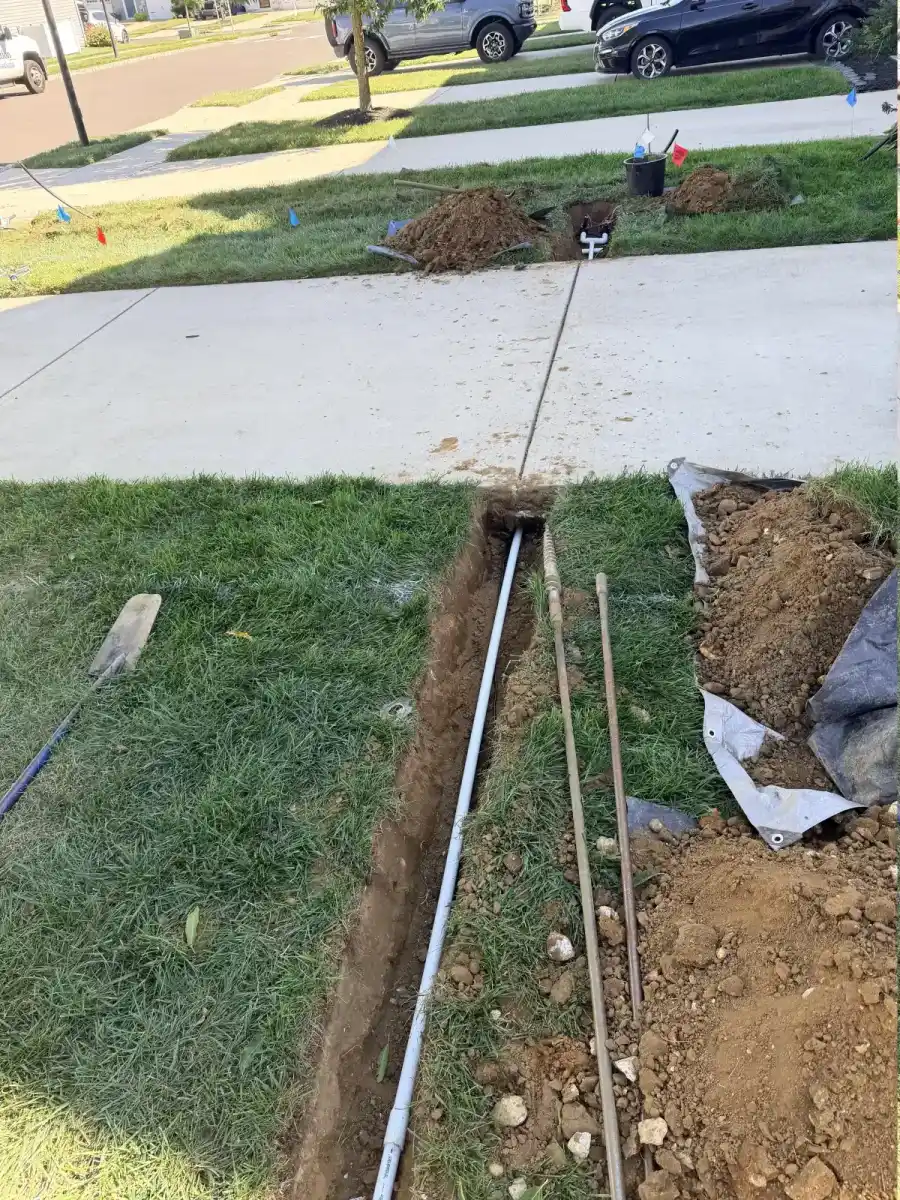
Installation equipment opens the routes needed for pipe and wiring while the crew works around known landscape and hardscape constraints. Irrigation Innovations uses Ditch Witch equipment for this phase and installs professional-grade Hunter components.
Pipe, fittings, valves, and wiring are assembled according to the zone plan. Heads are positioned to reach the intended area with useful overlap while limiting water on sidewalks, driveways, fences, and siding.
Stage 4: Heads, Controller, and Initial Programming
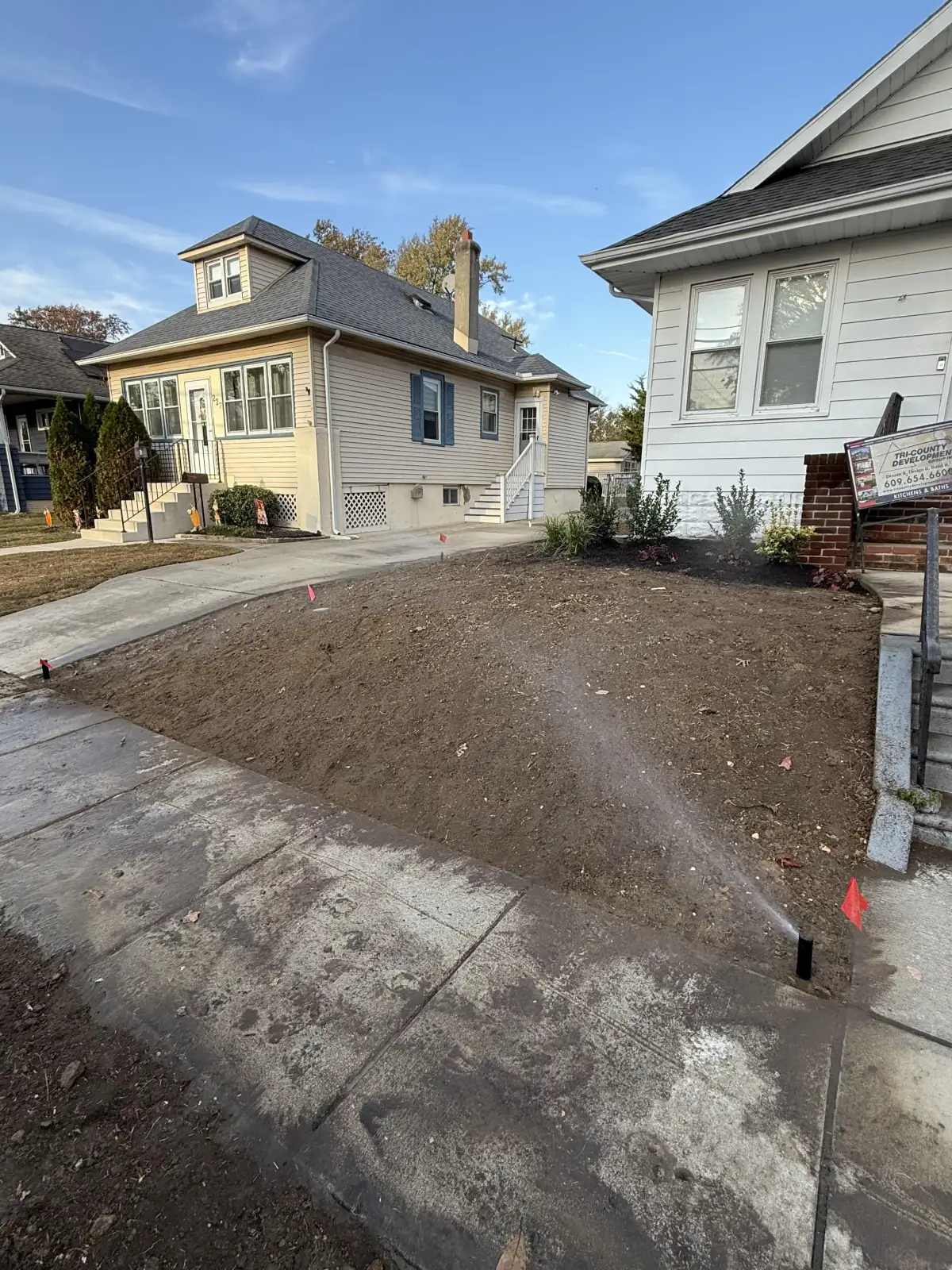
Spray heads, rotors, drip connections, and other outlets are set to the surrounding grade and aimed for their specific areas. The controller is connected, stations are labeled, and a starting schedule is programmed for the landscape and season.
A smart controller can be included when remote access and weather-aware adjustments fit the homeowner's preferences. The physical zone design still does the core work; controls cannot compensate for poor spacing or incompatible areas grouped together.
Stage 5: Pressure Test and Coverage Walk
Each zone is operated under normal pressure. The crew checks that heads rise, arcs reach their intended boundaries, valves respond, drip areas flow, and obvious leaks or overspray are corrected. Testing also reveals whether nozzles or run times need a final adjustment.
The last walkthrough should explain station labels, normal operation, seasonal adjustment, and what to watch as disturbed turf settles around new heads and pipe routes.
After Installation: Protect the System Through the Seasons
A new system still needs seasonal care. Spring start-up checks operation after winter, midseason maintenance keeps heads and schedules aligned with changing growth, and winterization clears water before freezing conditions can damage components.
Keeping the zone map and controller labels understandable makes future adjustments and Gloucester County sprinkler service faster and more focused.
Sprinkler Installation Process FAQ
What happens before sprinkler installation trenching begins?
The property walk and design phase identify lawn areas, planting beds, sun, shade, slope, water source, pressure, controller placement, valve access, pipe routes, and planned landscape or hardscape changes.
How long does sprinkler installation take?
Timing depends on property size, zone count, soil conditions, access, and system complexity. Many residential installations are completed over a short installation window, while larger residential, commercial, or athletic field systems can take longer. The estimate should explain the expected schedule for your property.
Can a new sprinkler system include dripline?
Yes. Dripline can be included for plant beds, shrub borders, vegetable gardens, and areas where spray heads would waste water or create overspray. A combined design can use sprinklers for turf and drip irrigation for beds when that better fits the landscape.
Does Irrigation Innovations install sprinkler systems in Gloucester County?
Yes. Irrigation Innovations LLC is based in Pitman and serves Gloucester County along with Camden, Burlington, Atlantic, Salem, Cumberland, and Cape May counties. Call (856) 716-1193 or use the contact form to request an estimate.