
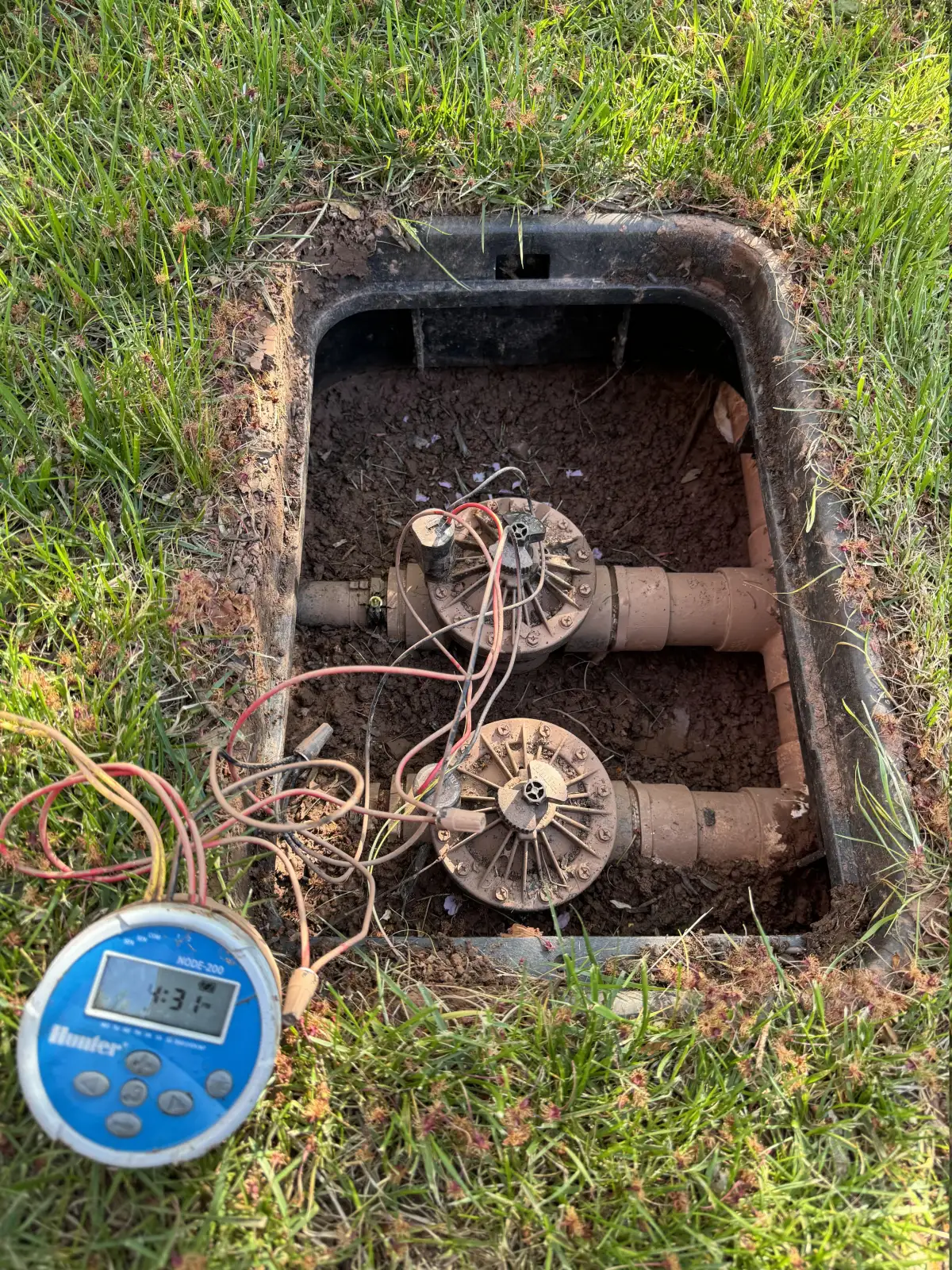
Irrigation Repair for South Jersey Sprinkler Problems
Diagnostic irrigation repair for leaks, wiring faults, stuck valves, damaged heads, uneven pressure, and controller problems.
Irrigation Innovations LLC provides diagnostic irrigation repair for leaks, wiring faults, stuck valves, damaged heads, uneven pressure, and controller problems. The work is planned for customers who need the cause of an irrigation problem found before parts are replaced across Gloucester, Camden, Burlington, Atlantic, Salem, Cumberland, and Cape May counties.
Irrigation repair starts with the evidence the property is showing. A wet valve box, dry strip of lawn, skipping controller station, broken head, or sudden pressure change can point to very different causes, so the repair visit begins with testing instead of a quick part swap.
South Jersey systems see damage from mower contact, frost movement, settling soil, root pressure, hardscape work, and older wiring. We trace those clues through the affected zone, controller, valve, and visible components so the repair addresses the cause of the failure.
Repair Symptoms Worth Checking Early
Call for repair when a zone will not start, a head stays stuck, water pools near a valve box, pressure drops suddenly, the controller shows faults, or one section of lawn turns brown while another is soaked. Those symptoms can point to different causes, so the visit should start with testing instead of guessing.
Pressure loss deserves special attention because it can come from leaks, clogged nozzles, damaged heads, poor zone balance, or a valve that is not opening fully. Finding the cause early helps protect the landscape and prevents a small buried problem from becoming a larger water-loss repair.
Repair decisions vary by property. A shaded Pitman yard, a Gloucester County athletic area, a sandy Cape May landscape, and a Burlington County commercial frontage can all show similar symptoms for different reasons. The repair visit is adjusted to the site instead of treating every zone as interchangeable.
How We Trace Sprinkler and Irrigation Failures
The repair sequence starts at the reported symptom, then moves backward through the active zone. We compare nearby heads, check controller output where appropriate, and look inside accessible valve boxes before recommending digging or larger replacement.
That order matters because a brown area may be caused by a blocked nozzle, while water pooling in the same yard may come from a cracked fitting or valve that will not close. We separate immediate water-loss repairs from coverage improvements so the estimate stays clear.
Replacement parts are matched to the existing head type, pressure, and zone layout. Before leaving, we run the repaired area again and explain whether the issue appears isolated or connected to age, wiring, controller setup, or older system design.
Local Conditions That Affect Repairs
Repair work is shaped by the season. Spring startup can reveal cracked fittings, summer heat exposes weak coverage, and fall service can uncover valves or heads that should be documented before shutdown. The same symptom can require a different priority depending on when it appears.
Older properties may also have repairs from multiple contractors, mixed head types, buried valve boxes, or zones that no longer match the landscape. We account for those details so the current repair does not create a new weak spot elsewhere in the system.
We also check whether service access is part of the problem. Buried valve boxes, hidden wire splices, blocked filters, and crowded plantings can slow repairs and make future issues harder to diagnose. Restoring access often saves time on the next visit.
For commercial, athletic, and larger residential sites, repair work follows the same diagnostic sequence at a bigger scale. The system still has to water efficiently while keeping sidewalks, parking areas, buildings, and high-traffic spaces usable during service.
Testing the Problem Zone Before the Yard Is Opened
- start with the symptom and trace it back to the active zone.
- use valve-box and controller diagnostics before opening unnecessary trenches.
- separate urgent water-loss repairs from optional coverage improvements.
- match replacement parts to existing system pressure and head type.
- test the repaired zone before closing the visit.
After the repair is reviewed, the owner should know what failed, what was fixed, and whether any remaining issue should be handled during maintenance or seasonal startup. Larger or older systems may receive a short priority list so the most urgent items can be addressed first.
That clarity matters because irrigation issues can be hidden underground or masked by weather. A focused repair visit gives the owner a better understanding of the current system and helps prevent the same symptom from returning in the next heat wave.
Repair Clues We Ask Customers to Share
The best repair visit starts with a clear description of what changed. A zone that stopped running after fence work, drainage work, pool construction, or landscape planting may point toward a damaged wire or pipe. A wet area that appears only during one station is different from a constant leak near a valve box or backflow assembly. A controller fault, skipped station, or buzzing valve can narrow the diagnosis before any digging begins.
Photos and timing notes can also help. If the same head breaks repeatedly, the cause may be mower contact, settling soil, poor head height, or pressure that is too high for that location. If one dry area appears every summer, the issue may be nozzle selection, clogged filters, poor spacing, or a zone that is carrying more demand than it should.
Keeping Repairs Focused and Practical
Not every repair call should turn into a full system replacement. When the rest of the system is sound, a targeted valve, head, fitting, wire, or controller repair can restore dependable operation. When several symptoms appear together, we explain which items should be handled now and which can be planned as maintenance or future upgrade work.
That practical sequence is especially important for older South Jersey systems with mixed head types, buried valve boxes, or repairs from different seasons. A clear repair priority protects the immediate landscape problem while giving the owner a realistic view of what may need attention before peak summer watering or before the next winter shutdown.
Repair Services and Next Steps
Some customers need a narrow repair, while others need a broader service visit after several symptoms appear at once. A zone-by-zone check can identify the right repair path before larger work is considered.
Request Irrigation Repair
When requesting repair, include the zone number if you know it, where the problem appears, whether water is leaking constantly or only during a run cycle, and any recent digging, landscaping, fence work, or controller changes near the affected area.