
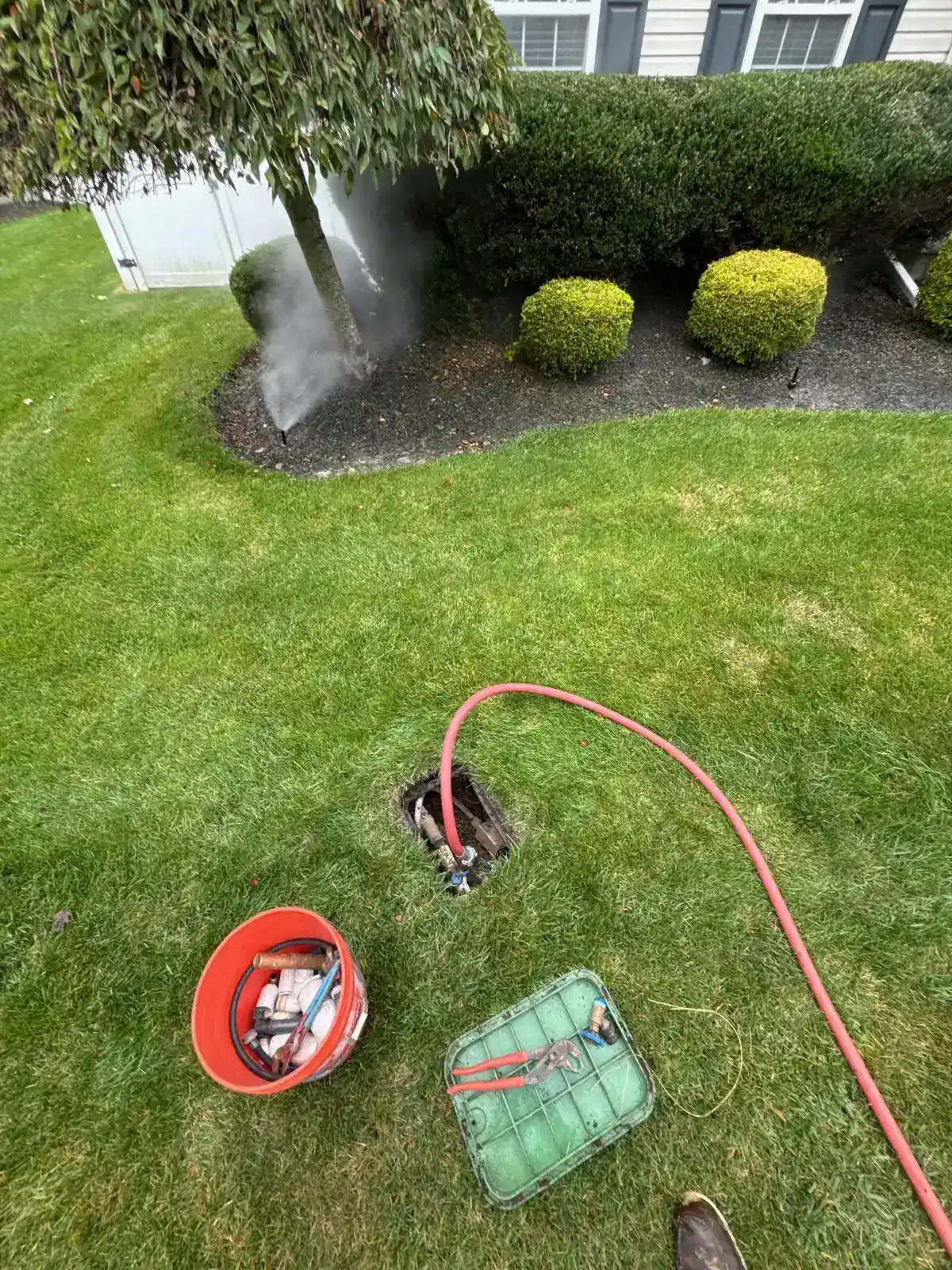
Irrigation Winterization Blowout in South Jersey, NJ
professional compressed-air irrigation blowouts that clear water from pipes, valves, heads, drip zones, and backflow assemblies before freezing weather.
Irrigation Innovations LLC provides professional compressed-air irrigation blowouts that clear water from pipes, valves, heads, drip zones, and backflow assemblies before freezing weather. The work is planned for system owners who want freeze-damage prevention handled before late fall cold snaps across Gloucester, Camden, Burlington, Atlantic, Salem, Cumberland, and Cape May counties.
Winterization is a freeze-protection service, not a coverage tune-up. The visit is focused on clearing water from pipes, valves, heads, dripline, and exposed assemblies before New Jersey cold weather can expand trapped water and damage the system.
We pay attention to connection points, low spots, backflow assemblies, controller status, drip zones, and larger properties that require more careful sequencing. The system should be shut down in a way that protects components now and makes spring startup easier to understand later.
The Best Time to Shut Down Your Irrigation
Fall winterization protects the underground system before New Jersey freezing temperatures can expand trapped water inside pipes, valves, heads, drip zones, and exposed components. The visit should clear the system carefully, shut down the controller, and leave the property ready for winter without confusing the spring start-up process.
Large systems require controlled sequencing instead of one high-pressure blast. A property with long rotor runs, dripline, multiple controllers, or a dedicated irrigation well may need more time and a different air-management approach than a small residential spray system.
The winterization plan is shaped by the parts that can hold water after the final run. Backflow assemblies, vacuum breakers, low pipe runs, valve boxes, and exposed fittings deserve special attention because freeze damage in those locations can be expensive to discover during spring startup.
Controlled Air, Zone by Zone
The visit starts by confirming the water source, controller, and safe connection point. Regulated compressed air is introduced in a controlled sequence so each zone can clear without unnecessary stress on heads, valves, or dripline.
Each zone is observed until discharge stops, then exposed components are checked for trapped water concerns. If a broken head, weak valve, buried box, or controller issue is noticed, we note it for spring rather than turning a fall blowout into an unclear repair appointment.
Customers should know the system was shut down, which components were handled, and whether any concern should be reviewed when water is restored. Good winterization creates a cleaner handoff into startup season.
South Jersey Freeze Risks We Check Closely
Timing is the biggest local decision. Scheduling too early can leave a property dry during a warm fall stretch, while waiting too late can expose shallow piping and backflow assemblies to hard freezes. Larger systems and commercial sites benefit from planning before the first cold snap is in the forecast.
System layout also affects the blowout. Long runs, dripline, slopes, separate controllers, and exposed assemblies may require a different sequence than a small residential turf system. We adjust the visit to the actual components on the property.
Access is part of freeze protection. A buried valve box, blocked controller, or hard-to-reach shutoff can slow the blowout and increase the chance that a vulnerable component is missed. We note those access concerns so the owner can correct them before the next seasonal appointment.
Commercial, athletic, and larger residential sites often need coordination around parking, gates, locked service areas, and high-traffic turf. Planning those details ahead of time keeps the fall shutdown efficient without rushing the actual clearing sequence.
What the Winterization Visit Includes
- shut down the controller and isolate the water source when needed.
- connect regulated compressed air at the correct system point.
- clear each zone until visible water discharge stops.
- protect backflow and exposed components from trapped water.
- note repairs or startup concerns for the next season.
After winterization, the system should remain shut down until conditions are safe for spring activation. If a repair concern was noticed during the blowout, we document it so the owner can plan startup or repair before regular watering begins.
That documentation matters because freeze damage and older system issues often look similar when water is restored. Clear fall notes help separate a winter problem from a repair that was already visible before shutdown.
Why the Blowout Sequence Matters
A professional winterization visit is not simply about forcing air through the system as fast as possible. Too much pressure can stress valves, heads, dripline, and older fittings, while too little attention can leave water trapped in low runs or exposed assemblies. The goal is a controlled clearing process that protects the system without creating damage during the shutdown itself.
Different zones may clear at different speeds. Long rotor runs, short spray zones, raised beds, and drip areas can all hold water differently. We watch each zone during the blowout so the system is cleared in a way that fits its layout instead of assuming every station should behave the same.
Preparing for a Cleaner Spring Start-Up
Good winterization also helps the next season begin more smoothly. When the controller status, shutoff location, backflow condition, and visible repair concerns are understood in fall, spring startup can focus on restoring water, testing zones, and adjusting coverage instead of sorting out unknown shutdown issues.
Customers can help by keeping the controller, water shutoff, valve boxes, and backflow assembly accessible before the appointment. If a zone had weak pressure, a broken head, or a leak during the summer, sharing that information during winterization helps us document what should be checked when the system is activated again.
For properties with well-fed irrigation, drip areas, or multiple controller locations, fall shutdown is also the right time to confirm which parts of the system are connected and which areas may need extra startup attention. That record reduces confusion when warm weather returns and helps protect the investment made in the irrigation layout.
Seasonal Services Before and After Shutdown
Winterization closes the season, while startup and maintenance prepare the system for the next one. Scheduling both at the right time helps protect components through winter and restore reliable watering in spring.
Schedule Fall Winterization
To schedule a fall blowout, provide the property address, approximate zone count, and any notes about backflow access, multiple controllers, dripline, or repairs that were noticed during the season. Clear access to the controller and shutoff helps the appointment move efficiently.