
Read the Lawn Before Changing the Controller
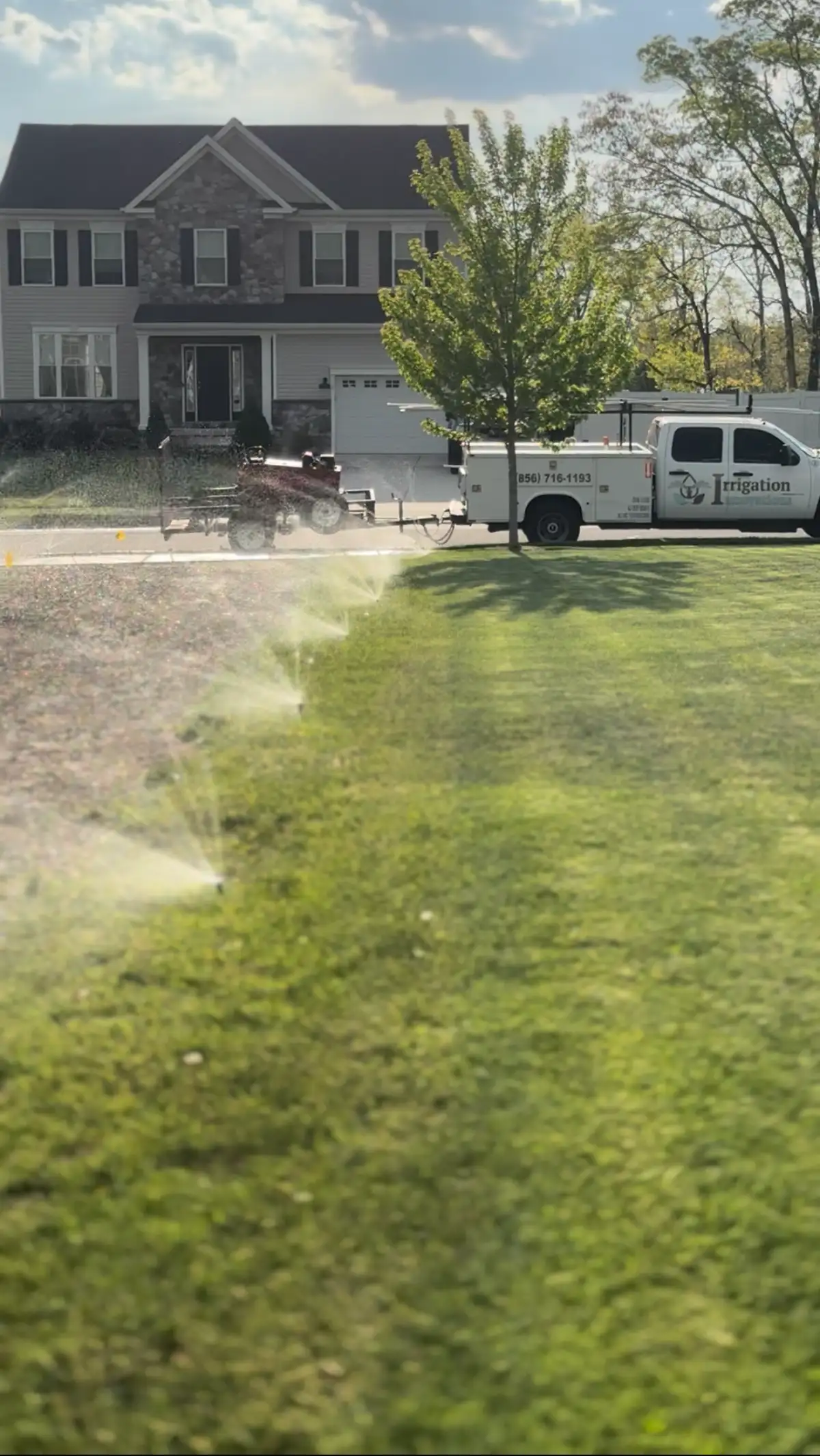
A dry patch does not automatically mean the lawn needs a longer watering cycle. Its outline often points to the source: a narrow brown arc suggests a head or nozzle issue, a whole zone fading at once can indicate pressure or valve trouble, and a sunny slope drying before the rest of the yard may need a different schedule.
Gloucester County yards combine compact borough lawns, mature shade, open subdivision turf, clay-heavy areas, sandy pockets, slopes, and hardscape edges. Before increasing every runtime, watch one complete cycle and compare where water lands with the pattern on the lawn. Irrigation Innovations provides sprinkler diagnostics throughout Gloucester County when the cause is not obvious.
Match the Shape of the Dry Area to the Likely Cause
A crescent-shaped dry area near one head often means the nozzle is clogged, the head is tilted, or the spray is blocked by taller turf. Parallel dry bands can point to spacing or pressure. A soggy patch beside a dry one may indicate a leak, a stuck head, or runoff rather than too little total water.
One Weak Head or a Whole Weak Zone?
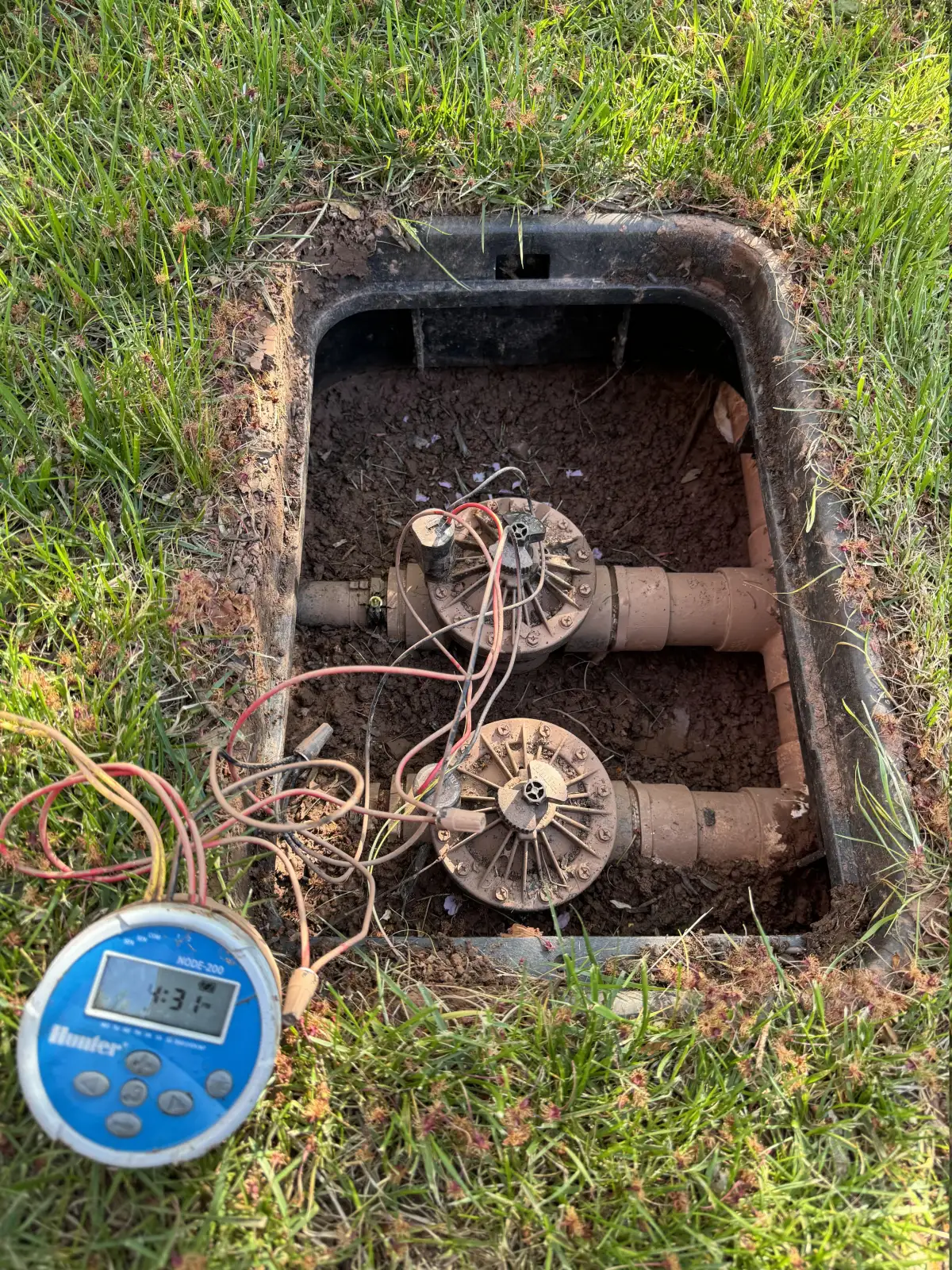
When one head underperforms, the problem may be local: debris in a nozzle, a damaged seal, a sunken body, or plant growth blocking the arc. When every head on a zone looks weak, the inspection should move upstream to pressure, a valve that is not opening fully, a filter restriction, a leak, or excessive demand on that zone.
This distinction helps a sprinkler repair visit start in the right place. It also prevents a controller change from masking a mechanical problem with longer runtimes.
Check for Changes Around the System
Sprinkler coverage can change even when the equipment has not failed. Maturing shrubs block spray, soil settles around heads, roots shift grade, and new fences, patios, beds, or walkways interrupt an older layout. Established properties in Pitman, Woodbury, and Glassboro are especially likely to have landscapes that have evolved around the original system.
A head that once cleared the lawn may now sit below the turf. A rotor that once covered an open corner may now spray into a shrub. Those problems call for adjustment or relocation, not simply more watering.
Separate Coverage Problems From Scheduling Problems
If the zone covers evenly while it runs but the lawn still dries at different rates, compare sun exposure, slope, soil, and plant type. A full-sun front lawn can need a different program than a shaded backyard. Heavier soil may benefit from shorter cycles with soak time, while a sandy section can lose moisture faster.
Review start times, seasonal adjustment, and rain-sensor behavior before changing individual runtimes. A smart irrigation controller can simplify seasonal changes, but it cannot correct a clogged nozzle, poor head spacing, or a leaking valve.
Know When the Pattern Points to Design
Targeted repairs can solve many dry spots. A larger design review may be needed when dry bands return after adjustments, heads cannot overlap properly, one zone combines full sun and dense shade, or turf and planting beds share the same watering method. In beds, dripline may fit the root zone better than spray.
Describe the pattern, zone number, recent landscape changes, and the last time the area watered evenly when requesting service. That evidence is more useful than guessing which component failed.
Dry Spot Diagnosis FAQ
What causes a sprinkler-shaped dry spot in a lawn?
A narrow arc or crescent-shaped dry area often points to a clogged nozzle, tilted or sunken head, blocked spray, or poor overlap. If a whole zone is dry, pressure, valve operation, a leak, or zone demand may be the cause.
Can an older sprinkler system be repaired?
Many older systems can be repaired or improved. Head adjustments, nozzle changes, valve repairs, controller programming, and targeted pipe repairs may solve the issue. Replacement becomes more likely when the original layout cannot provide reliable coverage or recurring failures make repair less practical.
When should I schedule startup and winterization in Gloucester County?
Schedule spring startup after hard-freeze risk has passed and before regular watering is needed. Schedule winterization in fall before freezing weather can damage pipes, valves, heads, and backflow components. Peak seasonal windows fill quickly, so earlier booking is usually easier.
Does Irrigation Innovations serve my part of Gloucester County?
Irrigation Innovations LLC is based in Pitman and serves Gloucester County as part of its South Jersey coverage area. The service area also includes Camden, Burlington, Atlantic, Salem, Cumberland, and Cape May counties. Call (856) 716-1193 or use the contact form to confirm scheduling for your property.