
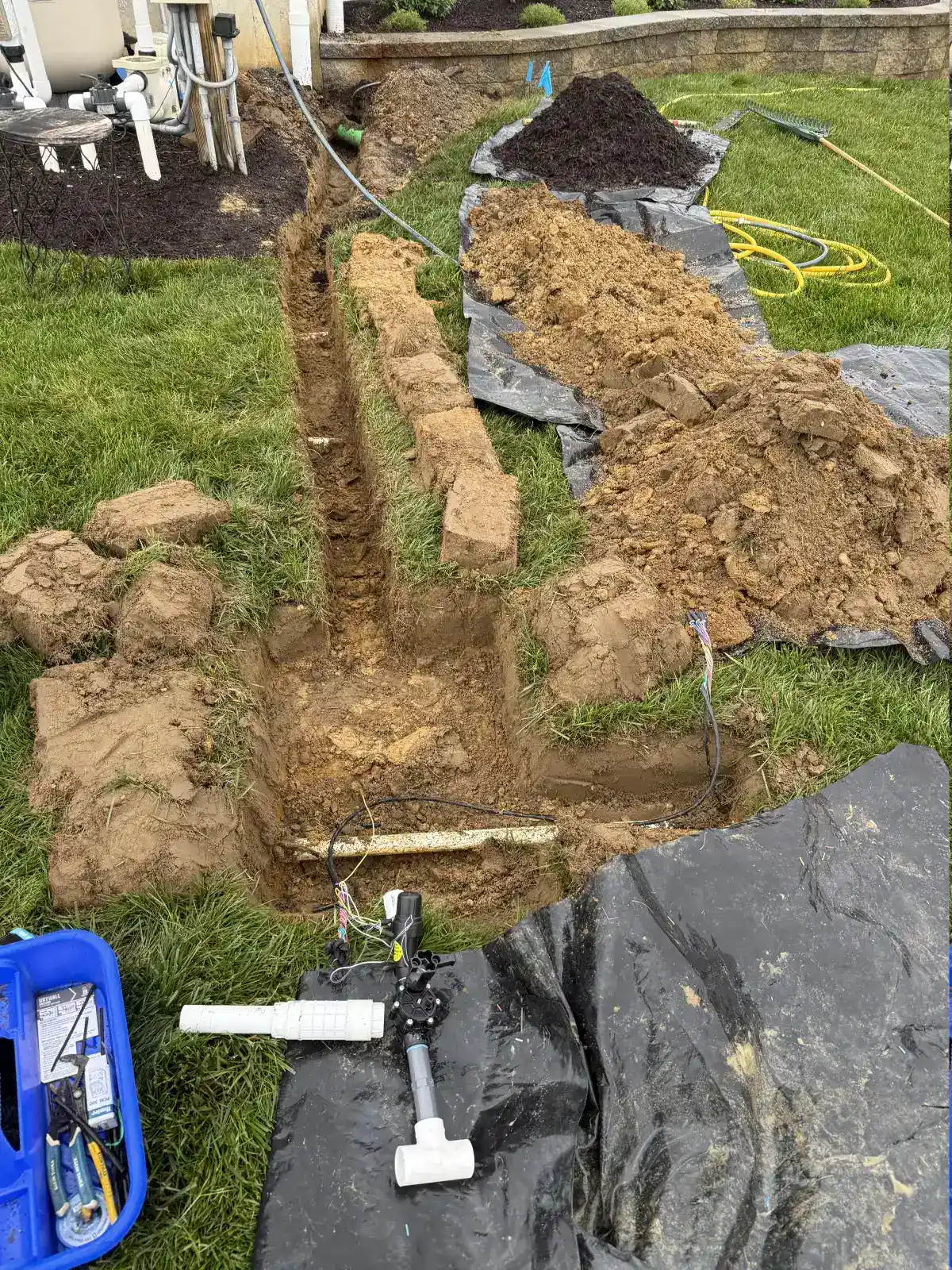
Build a Useful Service Request Before the Appointment
Before asking what an irrigation system costs, define what you need the system to do. A Gloucester County property may combine open turf, shaded lawn, planting beds, slopes, hardscape, mature roots, and areas where spray or runoff would create a problem. Those conditions affect the scope of a new irrigation system and the diagnosis of an existing one.
A short property walk can make the first conversation much more productive. Use this guide to separate a new-system request from a repair, prepare the details that shape an estimate, and understand the ownership questions that still matter after installation.
Write Down the Outcome, Areas, and Symptoms
Start with the result you want, then note where water is needed and what is happening now. This creates a better service request than guessing at price, zone count, or run time.
What to Note During Your Property Walk
- New installation, added coverage, system evaluation, or a specific repair
- The lawn, beds, new plantings, or other areas that need dependable water
- Municipal water, an irrigation well, or an unknown water source
- Planned fences, patios, pools, grading, sod, or planting work
- Pooling, overspray, weak heads, dry spots, failed zones, or controller errors
1. Am I Booking Installation, Repair, or a Full Evaluation?
Choose the appointment by the problem you need solved. Request a new-system estimate when the property has no irrigation or when the landscape plan calls for a new layout. Request irrigation repair when you can point to a focused symptom such as a broken head, leaking line, valve problem, controller fault, or zone that will not run correctly.
A broader evaluation makes sense when several zones water unevenly, the landscape has changed substantially, or repeated repairs have not corrected the underlying coverage issue. If you are unsure, describe the symptoms rather than choosing a technical diagnosis. Photos, controller messages, and the station number or yard area involved can help clarify the starting point.
A Clear Request Leads to a Clearer Estimate
State the result you want, identify the areas involved, and disclose upcoming landscape work. The contractor can then evaluate the right water source, pressure and flow, zone layout, components, access, and testing instead of pricing an incomplete assumption.
2. What Makes an Irrigation Estimate Property-Specific?
Online averages cannot account for the actual work at a Gloucester County home. A useful estimate considers which areas need water, the available pressure and flow, zone separation, grade, soil response, hardscape crossings, mature roots, component access, controller placement, and any existing equipment that will remain.
Ask the estimate to identify the areas included, proposed watering methods, major components, testing, homeowner preparation, and exclusions. Two totals are not comparable if one covers only turf while another includes planting beds, controls, difficult crossings, or work at the water source.
3. How Should a One-Acre or Mixed-Use Property Be Scoped?
Acreage does not reveal how much of the parcel needs irrigation. A one-acre property might include a maintained front lawn, shaded backyard, new trees, garden beds, play space, driveway, wooded edge, and open ground that does not need automatic watering. Mark the priority areas before asking what it costs to irrigate an acre.
Long pipe runs, changes in elevation, driveway crossings, fences, mature roots, and pressure limits also affect larger-property planning. A better estimating question is: “Which areas need separate, dependable coverage, and what can the available water supply support?”
4. Should Turf and Planting Beds Share the Same Zones?
They should be evaluated separately. Sprinklers commonly serve turf, while dripline or drip irrigation may be appropriate for certain beds and narrow planted areas. Full-sun lawn, shaded turf, foundation beds, and new plantings can also respond differently because their exposure, roots, and watering methods are not the same.
Good zone separation gives the controller something meaningful to control. Ask how the layout will keep water on the intended landscape and away from sidewalks, driveways, buildings, and neighboring property. This matters locally because stormwater planning is an active Gloucester County concern; irrigation should not create avoidable runoff or carry water across hard surfaces.
5. Does Gloucester County's Planting Zone Set Run Time?
No. Plant hardiness information describes expected winter cold and helps with plant selection; it does not establish a sprinkler schedule. A sunny lawn, shaded backyard, recently graded soil, mature planting bed, and slope can absorb and lose water differently even within the same neighborhood.
Run time should respond to the plants, soil behavior, slope, sun and shade, sprinkler output, rainfall, and season. If water begins running off before the landscape is adequately watered, shorter cycles with soak time may help in some conditions. If dry wedges remain, the cause may instead be blocked spray, head placement, pressure, or a repair need.
6. What Does the Contractor Need to Know About the Water Source?
Tell the contractor whether the property uses municipal water or a dedicated irrigation well, if known. You do not need to diagnose pressure or flow yourself. Do mention several heads rising weakly, shorter spray distance, performance changes after plumbing work, or a pump or controller that behaves differently than before.
The source affects how zones are planned and which equipment can operate together. If you are considering an irrigation well conversion, raise it at booking so the supply, pump and controls, and existing irrigation layout can be considered together.
7. What Maintenance and Access Should Be Planned From Day One?
Ask where the controller, valves, and service points will be located, how zones will be identified, and what homeowner instructions are provided. For an existing system, share known station labels, controller information, prior repairs, and any areas where digging or hardscape work occurred. Accessible, identifiable components make future diagnosis more direct.
Common trouble signs include broken or blocked heads, uneven spray, pooling, leaks, valves that will not open or close, wiring faults, controller errors, and a zone with noticeably weak pressure. Seasonal checkpoints matter too: spring start-up can uncover damage or shifted settings, in-season checks can correct changing coverage, and irrigation winterization helps protect components before freezing weather.
FAQ: Gloucester County Irrigation System Estimates
What is the average cost of an irrigation system?
An online average is not a reliable estimate for a specific Gloucester County property. The water source, available pressure and flow, areas to be watered, zone layout, grade, hardscape, access, component choices, and condition of existing equipment all affect the scope.
How much does it cost to install a sprinkler system in New Jersey?
A useful New Jersey installation estimate follows an on-site review. Compare the areas included, zone plan, watering methods, major components, testing, homeowner preparation, and any work involving the existing water supply rather than relying on a statewide flat price.
How much does it cost to irrigate one acre?
Acreage alone does not establish the scope. A contractor needs to know whether the entire acre or only selected lawn and planting areas need irrigation, plus the water supply, pipe runs, grade, access, zone requirements, and watering methods.
Does Gloucester County's planting zone determine irrigation run time?
No. A plant hardiness zone helps with plant selection by describing expected winter cold; it does not set irrigation run time. Scheduling should reflect the plants, soil response, sun and shade, slope, sprinkler output, rainfall, and season at the property.
What are common signs that an irrigation system needs repair?
Common warning signs include broken or blocked heads, uneven spray, pooling, leaks, valves that do not open or close, wiring or controller errors, a zone that does not run, and noticeably weak pressure. Describe the visible symptom rather than assuming which component failed.
What maintenance should I plan after booking irrigation service?
Plan for a careful spring startup, zone and coverage checks during the watering season, adjustments after landscape or hardscape changes, and winterization before freezing conditions. The appropriate frequency depends on the system and property.