
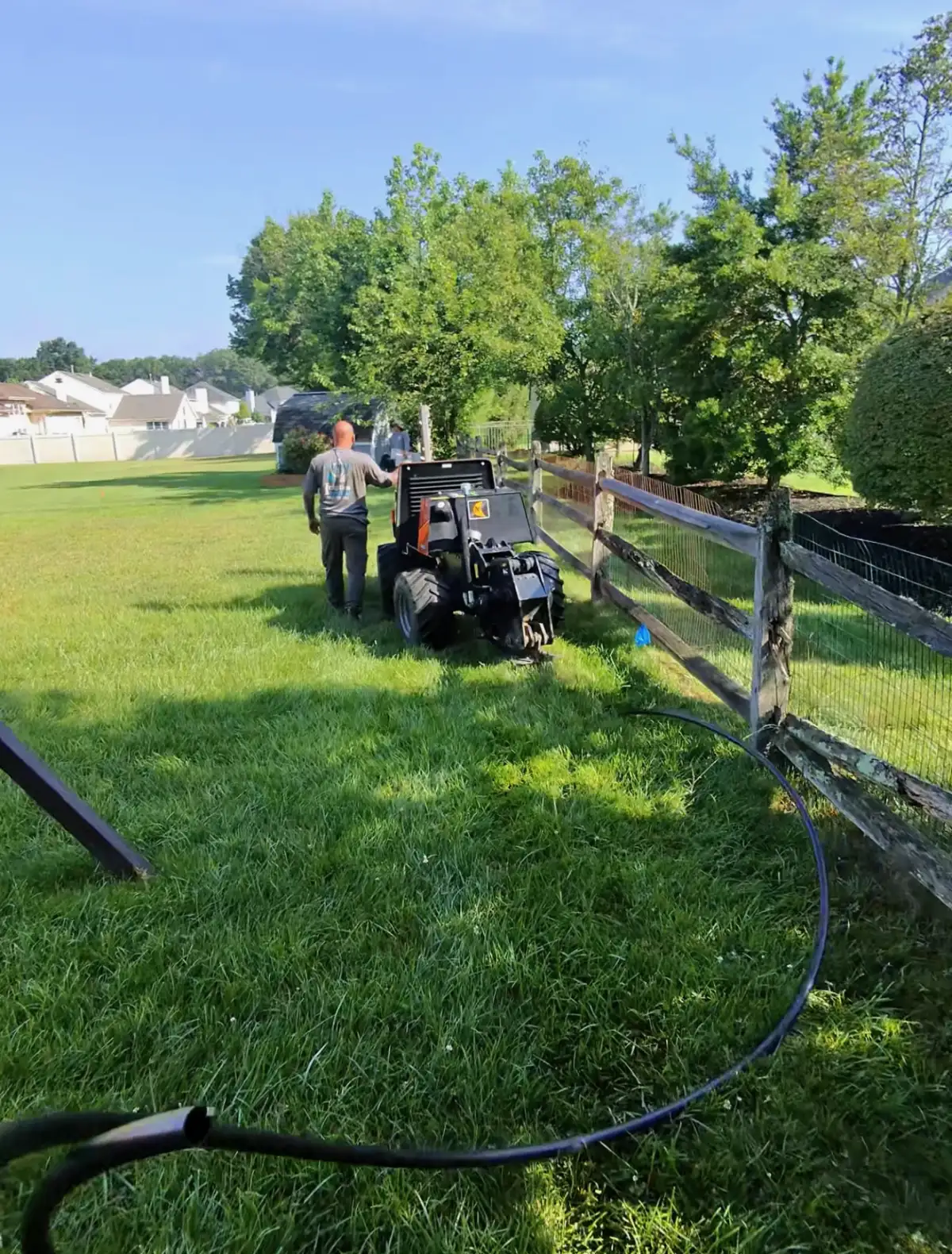
Turn a Price Question Into a Property-Specific Plan
The most useful irrigation estimate begins by defining what needs water, not by applying an average price to the whole property. Gloucester County yards can combine open lawn, shaded turf, established beds, new plantings, slopes, hardscape, and areas that should stay dry. Each condition can affect how an irrigation system is divided, installed, and maintained.
Before booking, walk the property and decide which outcome matters: installing a new system, extending coverage, correcting recurring dry areas, or repairing a focused failure. The questions below help turn that goal into a clearer conversation with Irrigation Innovations LLC.
Mark the Areas That Need Water First
Separate must-water areas from the rest of the parcel. A large lot does not automatically mean every square foot needs the same coverage, equipment, or schedule.
Note These Details Before You Call
- Lawn, planting beds, new sod, trees, or mixed landscape areas
- Full sun, shade, slopes, narrow strips, and hardscape edges
- Municipal water, irrigation well, or an unknown water source
- Fences, patios, pools, grading, or planting work still being planned
- Leaks, weak spray, dry areas, failed zones, or controller messages
1. What Does an Irrigation System Estimate Actually Cover?
A dependable estimate should explain the proposed work, not only the total. Ask which landscape areas are included, how they will be grouped into zones, what watering methods and major components are planned, how the finished system will be tested, and what preparation is expected before installation.
Water source, available pressure and flow, grade, hardscape crossings, equipment access, controller placement, plant material, and existing underground components can all change the scope. That is why a Gloucester County address or statewide average cannot produce a reliable property-specific number by itself.
Compare Written Scope Before Comparing Price
Two estimates can look similar while serving different parts of the property or including different controls, valves, watering methods, testing, and restoration. Ask what is included, what is excluded, and which property conditions shaped the recommendation.
2. Does the Entire Acre Need Irrigation?
For a one-acre property, begin with use rather than acreage. The home’s maintained lawn, front landscape, play area, vegetable garden, and distant perimeter may not share the same watering priority. Marking the intended coverage keeps the estimate focused on the areas that matter instead of assuming uniform irrigation across the parcel.
Large or divided properties also bring longer pipe routes, pressure and flow limits, grade changes, mature roots, driveway crossings, fenced areas, and future access into the discussion. The practical question is not “What does one acre cost?” but “Which parts need independent, dependable water, and what supply is available to serve them?”
3. Should Lawn and Planting Beds Be Watered the Same Way?
Usually, they should at least be evaluated separately. Sprinklers commonly serve turf, while dripline or drip irrigation may fit certain planting beds. Full-sun turf, shaded lawn, foundation plantings, and narrow side yards can also need separate control because their exposure, root depth, and application method differ.
Ask how the layout will keep spray on the intended landscape and away from pavement, buildings, and neighboring property. Useful zone separation gives the controller meaningful control; a schedule cannot compensate for unrelated areas that were grouped together from the start.
4. Does Gloucester County's Planting Zone Set the Schedule?
No. Plant hardiness information helps homeowners choose plants that can tolerate expected winter cold. It does not prescribe irrigation run time. Even within the same neighborhood, recently graded soil, an established tree line, a sunny front lawn, and a shaded backyard can absorb and lose water differently.
Scheduling should respond to the plants, soil behavior, sun and shade, grade, sprinkler output, rainfall, and season at the specific property. If runoff starts before the landscape receives enough water, shorter cycles with soak time may help in some conditions; if dry wedges remain, the issue may be head placement, blocked spray, pressure, or a repair need rather than too little controller time.
5. What Should I Know About the Water Source?
Tell the contractor whether the property uses municipal water or a dedicated irrigation well, if known. You do not need to diagnose pressure or flow before calling, but share visible changes such as several heads rising weakly, shorter spray distance, or performance that changed after plumbing or landscape work.
The water source influences how zones are planned and which equipment can operate together. If you are considering an irrigation well conversion, include that in the first request so the water supply and the existing irrigation layout can be evaluated as one system.
6. How Will the System Stay Accessible for Future Service?
A new installation should be planned for ownership, not only for the first watering cycle. Ask where the controller, valves, and other service points will be located; how zones will be identified; what homeowner instructions are provided; and how future landscape or hardscape work could affect access.
For an existing system, share any known station labels, prior repairs, controller information, or areas where digging has occurred. That history can help separate one failed component from a broader layout or wiring issue. A focused irrigation repair visit may be enough when the symptom is limited to one head, line, valve, wire, controller, or zone.
7. What Seasonal Care Should Be Planned at Booking?
Ask what the system will need after installation or repair. A careful spring startup can reveal freeze damage, leaks, blocked spray, shifted heads, or controller settings that no longer fit the landscape. Midseason checks are useful after plant growth, construction, or a visible change in coverage.
Before freezing conditions, irrigation winterization helps protect system components. Homeowners who want regular zone testing, controller review, and adjustments can also compare irrigation maintenance. Planning these checkpoints early makes ongoing ownership part of the estimate conversation rather than an afterthought.
FAQ: Gloucester County Irrigation System Estimates
What is the average cost of an irrigation system?
An online average is not a reliable estimate for a specific Gloucester County property. The water source, available pressure and flow, areas to be watered, zone layout, grade, hardscape, access, component choices, and condition of existing equipment all affect the scope.
How much does it cost to install a sprinkler system in New Jersey?
A useful New Jersey installation estimate follows an on-site review. Compare the areas included, zone plan, watering methods, major components, testing, homeowner preparation, and any work involving the existing water supply rather than relying on a statewide flat price.
How much does it cost to irrigate one acre?
Acreage alone does not establish the scope. A contractor needs to know whether the entire acre or only selected lawn and planting areas need irrigation, plus the water supply, pipe runs, grade, access, zone requirements, and watering methods.
Does Gloucester County's planting zone determine irrigation run time?
No. A plant hardiness zone helps with plant selection by describing expected winter cold; it does not set irrigation run time. Scheduling should reflect the plants, soil response, sun and shade, slope, sprinkler output, rainfall, and season at the property.
What should I have ready before an irrigation estimate?
Identify the lawn and planting areas that need water, the water source if known, visible problems in an existing system, recent or planned changes to the property, access limitations, and the seasonal services you want to plan for.
How often should an irrigation system be serviced?
Service timing depends on the system and property. Common checkpoints include a careful spring startup, zone and coverage checks during the watering season, adjustments after landscape changes, and winterization before freezing conditions.