
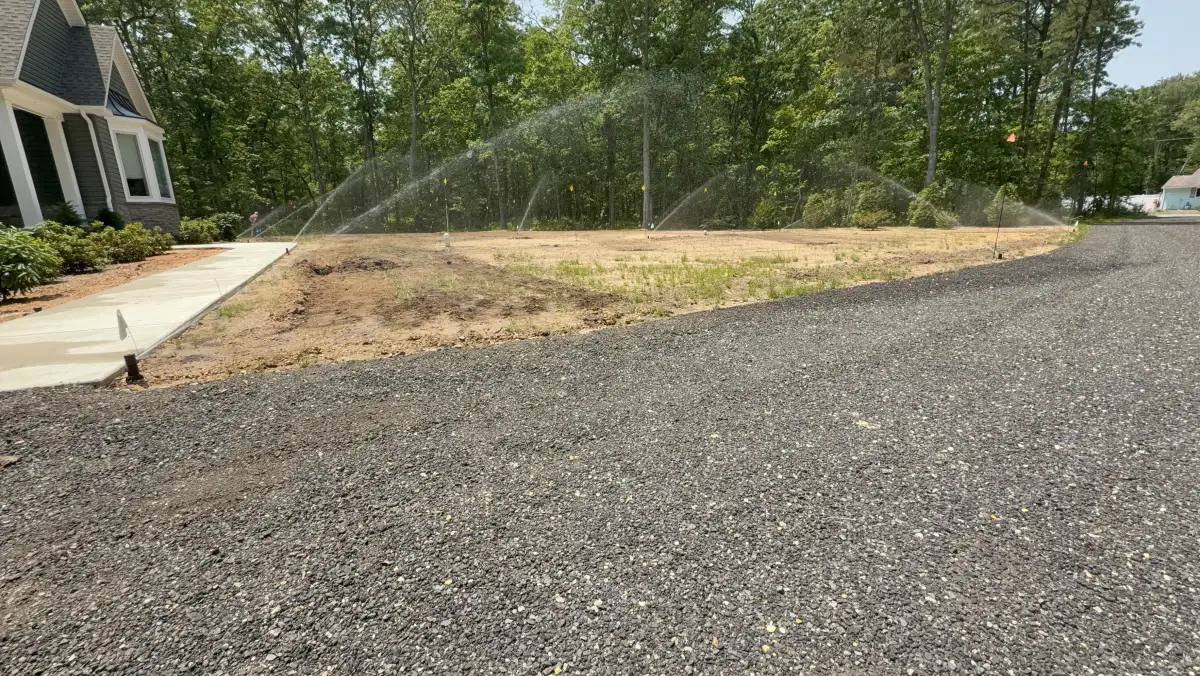
What to Decide Before You Schedule Irrigation Service
The best first step is not choosing a controller or guessing how many zones you need. It is explaining what must be watered, what the property is doing now, and what you want the system to solve. Those details give an irrigation contractor a useful starting point for an installation estimate, repair visit, or system evaluation.
Irrigation Innovations LLC is based in Pitman and serves properties throughout Gloucester County, NJ. The company installs, repairs, and maintains irrigation systems for lawns, planting beds, and mixed landscapes across its South Jersey service area.
Start With the Property, Not a Rule of Thumb
An online average can help frame a question, but it cannot account for the water supply, zone layout, soil, grade, access, or existing equipment at your home.
Before You Book
- Expect a site-specific estimate rather than a countywide flat price.
- Do not assume every sprinkler zone should run for 10 minutes.
- Use plant hardiness as a planting guide, not a watering timer.
How Much Does an Irrigation System Cost in Gloucester County?
There is no dependable answer based on the county or lawn square footage alone. Two similar-looking properties can require different work because water pressure and flow, lawn shape, planting beds, slopes, hardscape, service access, and controller placement all affect the plan.
For a new installation, the estimate should follow a property review. The contractor needs to understand where the water comes from, which areas need independent control, where lines can be routed, and whether sprinklers, dripline, or a combination fits the landscape. An existing system adds another question: which components and underground lines are still usable?
Ask What the Estimate Covers
Instead of comparing one bottom-line number, ask which areas will be watered, how zones will be separated, what controller and components are included, how the system will be tested, and what homeowner instructions or future service are part of the scope.
Is 10 Minutes of Sprinkler Run Time Enough?
Ten minutes is a clock setting, not a watering standard. The amount of water delivered in that time changes with sprinkler type, nozzle output, pressure, head spacing, and zone condition. Soil infiltration, slope, sun, shade, temperature, rainfall, and root depth determine how that water behaves after it reaches the ground.
A short run may leave one area dry while a longer run causes another to puddle or flow onto pavement. That is why turf, shaded areas, narrow lawn strips, and planting beds should not automatically share one schedule. Where runoff begins before a zone receives enough water, shorter cycles with soak time between them may be more useful than one uninterrupted run.
Watch the property rather than the timer alone. Dry wedges can point to blocked or misaligned spray, while a soggy area may indicate poor drainage, a leak, or too much run time. If coverage is uneven even after reasonable scheduling changes, a system repair and zone check is a better next step than continuing to add minutes.
Does Gloucester County's Planting Zone Set the Watering Schedule?
No. A USDA plant hardiness zone describes expected winter cold and helps homeowners choose plants that can tolerate local conditions. It does not prescribe irrigation run time. Even within one county, a sunny front lawn, a shaded backyard, an established tree line, and a new construction lot with compacted fill can hold and lose water differently.
Match watering to the plants and the specific part of the property. Lawn, shrubs, perennial beds, and new plantings can have different root depths and moisture needs. Sprinklers commonly serve turf, while drip irrigation can apply water within planting beds without forcing the lawn schedule onto them. The useful design question is not only “What grows here?” but also “Which areas need to be controlled separately?”
What Should a Contractor Review Before Recommending a System?
A site visit should connect the water source to the landscape. Important factors include available pressure and flow, property grade, sun and shade, turf and planting areas, hardscape edges, access for installation and future repair, and a practical controller location. If the property uses or may use a dedicated irrigation well, mention that before the estimate because the water source affects the overall design.
Gloucester County properties are not all alike. Established neighborhoods can include mature roots and older systems; newer properties may have recently graded soil, fresh sod, or planned patios and fences. Tell the contractor about work that is scheduled but not yet complete so the system is not planned around a landscape that is about to change.
Should You Repair the Existing System or Discuss a New Layout?
A focused service and repair appointment makes sense when the issue is specific: a broken head, leaking line, failed valve, controller problem, wiring fault, or one zone that does not operate correctly. Note the station number or yard area involved, what happens when it runs, and when the problem began.
Ask for a broader evaluation when failures repeat across the property, coverage no longer matches the landscape, or major changes have left heads blocked or watering the wrong places. The answer may still be targeted corrections rather than total replacement, but the technician needs to see the system as a whole before recommending the scope.
What Happens After You Book?
Start by sharing whether this is a new installation, a repair, or a general system review. Include the areas involved, the water source if known, visible symptoms, and recent landscape or hardscape changes. Irrigation Innovations can then direct the request toward the appropriate service.
FAQ: Gloucester County Irrigation Systems
How much does an irrigation system cost in Gloucester County, NJ?
There is no reliable property-specific price based on county or lawn size alone. The estimate depends on the water source, available pressure and flow, number and type of watering areas, access, hardscape, grade, equipment needs, and whether an existing system can be reused or repaired.
Is 10 minutes of sprinkler run time enough?
Ten minutes may be too short, enough, or too long depending on the sprinkler type, application rate, soil infiltration, slope, weather, and plant needs. Each zone should be scheduled according to what it waters and adjusted when runoff, puddling, or dry areas appear.
Does Gloucester County's planting zone determine an irrigation schedule?
No. A USDA plant hardiness zone describes expected winter cold and helps with plant selection; it does not prescribe sprinkler run time. Irrigation scheduling should respond to the plants, root depth, soil, sun and shade, slope, sprinkler output, rainfall, and season at the specific property.
What should an irrigation system estimate include?
A useful estimate should be based on a property review that covers the water source, pressure and flow, lawn and planting areas, grade, hardscape, access, zone layout, controller location, and ongoing service needs. Homeowners should also understand what is included in the proposed scope.
Should I book irrigation repair or ask about a new system?
Book repair when an existing system has a focused problem such as a broken head, leak, failed zone, wiring fault, valve issue, or controller problem. Ask for a broader system evaluation when repeated failures, major landscape changes, or widespread coverage problems suggest the layout no longer fits the property.