
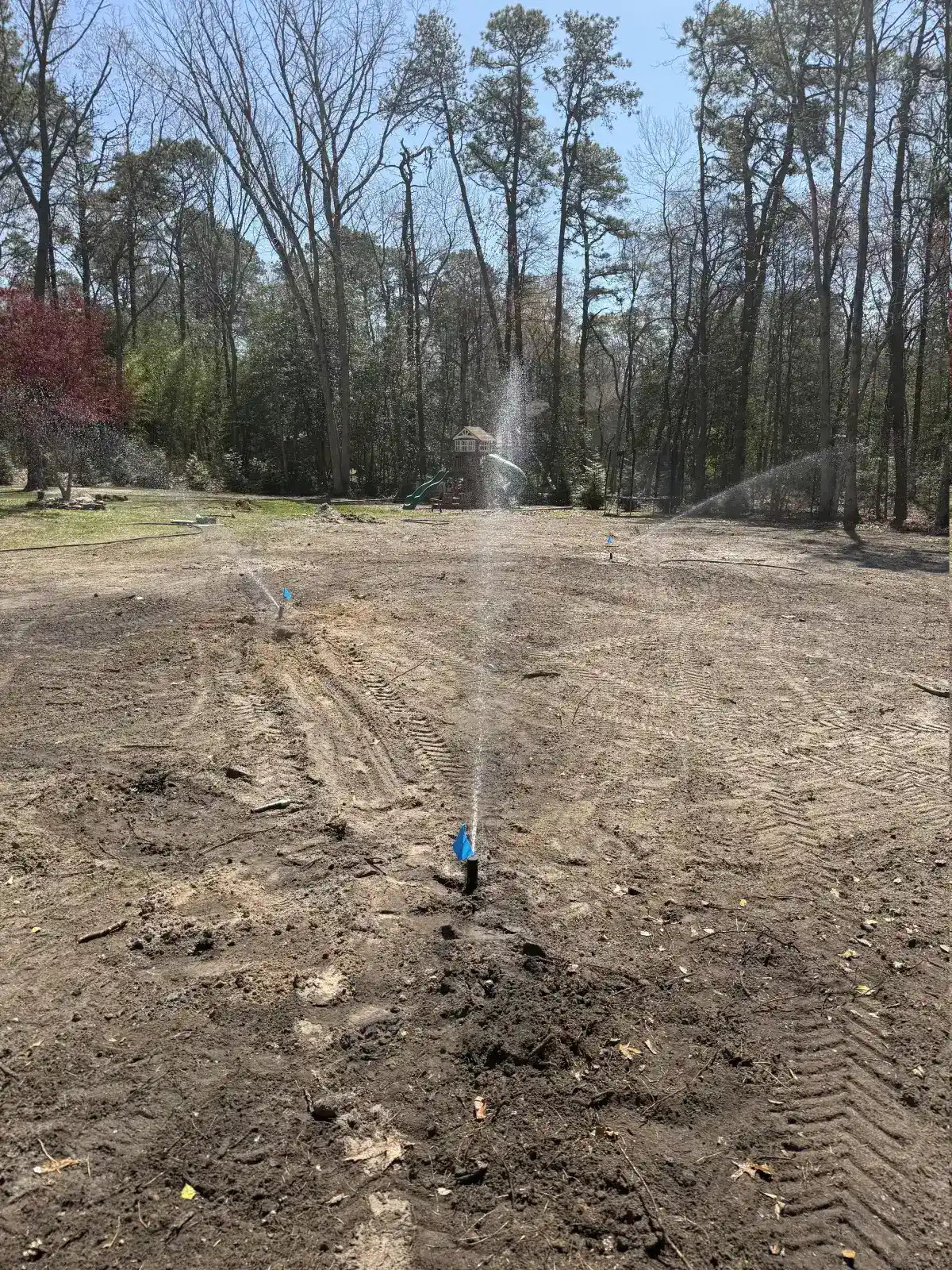
Start With the Property, Not an Online Average
The most useful irrigation estimate answers a property question: what needs water, and what system scope will serve it? A Gloucester County yard can include sunny turf, mature shade, new planting beds, compacted fill, slopes, hardscape, and areas where spray or runoff should be avoided. Those conditions cannot be reduced to one price per acre or one standard zone count.
Before booking a new irrigation system, a repair, or a broader redesign, use the questions below to define the work and compare recommendations on equal terms.
Bring Clear Boundaries to the Estimate
You do not need to design the system yourself. You do need to explain the outcome, the areas involved, known equipment or symptoms, and any property changes that could affect the plan.
Have These Details Ready
- Which lawns, beds, trees, or new plantings need automatic watering
- Which pavement, walls, buildings, or neighboring areas should stay dry
- Municipal water, an irrigation well, or an unknown water source
- Existing controller information, zone numbers, leaks, weak spray, or dry areas
- Planned grading, sod, fences, patios, pools, driveways, or landscape changes
1. Which Parts of the Property Actually Need Automatic Watering?
This is the question behind searches for the cost to irrigate one acre. Parcel size is only a boundary. A one-acre property may contain a maintained lawn and planting beds along with wooded edges, buildings, pavement, or open ground that does not need automatic irrigation.
Mark priority areas before the visit. Then ask whether each area needs spray, rotor coverage, drip irrigation, or no permanent irrigation at all. That turns acreage into a defined coverage plan and keeps estimates from being based on different assumptions.
2. Can the Existing System Be Repaired, Extended, or Should the Layout Be Reconsidered?
“Redoing” an irrigation system can mean very different things. A failed head, leaking line, faulty valve, controller issue, or one weak zone may point to a focused irrigation repair. A new bed or small uncovered area may call for an extension or revised zone.
A broader redesign may deserve discussion when the landscape has changed substantially, several zones have chronic coverage problems, components are difficult to access, or turf and beds were grouped in ways that no longer match their watering needs. Ask what can remain, what must change, and why. That explanation is more useful than a replacement total without a diagnosis.
Compare the Scope Line by Line
Look for the areas included, proposed zones and watering methods, water-source work, major components and controls, testing and adjustments, site preparation, and exclusions. Two estimates are not equivalent when they solve different coverage problems.
3. How Will Different Sun, Soil, Slope, and Planting Conditions Be Separated?
Gloucester County properties are not uniform. Full-sun turf can dry differently from a shaded backyard. Recently disturbed or compacted soil can accept water differently from an established planting bed. Slopes may begin shedding water before flatter areas do.
Ask how the proposed zones separate areas with different exposure, plant material, watering method, or runoff risk. Useful separation allows the controller to make meaningful schedule adjustments instead of forcing every part of the property to run together.
4. Can the Water Source Support the Proposed Zone Plan?
Available pressure and flow affect how many heads or emitters can operate together and how zones are arranged. Tell the contractor whether the property uses municipal water or a dedicated irrigation well, if known. For an existing system, mention heads that rise slowly, shortened spray distance, changes after plumbing work, or pump behavior that differs from the past.
You do not need to measure or diagnose the supply yourself. Ask how it will be evaluated and how the zone plan responds to it. If you are considering an irrigation well conversion, include that in the original request so the supply, controls, and irrigation layout can be reviewed together.
5. What Installation Work Could Affect the Yard?
Installing an irrigation system generally involves mapping coverage, choosing routes for pipe and wiring, placing heads or dripline, connecting controls, and testing each zone. The exact approach depends on the site. Driveways, walks, mature roots, fences, narrow access, planned hardscape, and changes in elevation can all affect routing.
Ask where crossings or access constraints exist, what should be completed before installation, and how the finished zones will be tested and explained. If other outdoor work is planned, coordinating the sequence can help avoid placing new features over irrigation routes or redesigning a layout immediately after it is installed.
6. How Will the Plan Limit Overspray and Avoidable Runoff?
Heads and dripline should serve the intended landscape rather than pavement, structures, or neighboring property. Ask how narrow lawn areas, slopes, bed edges, and hardscape boundaries will be handled. When water runs off before an area is adequately watered, the cause may involve scheduling, soil response, grade, pressure, head selection, or coverage—not simply a need for longer run times.
Gloucester County maintains stormwater pollution-prevention responsibilities, and municipalities may have project-specific requirements. Confirm any permit, backflow, utility-marking, or water-use questions with the appropriate local authority for the property rather than assuming one countywide rule applies to every project.
7. What Service Will the System Need Through the Year?
Ownership planning should be part of the booking conversation. Ask where the controller, valves, and service points will be located; how zones will be identified; and what homeowner instructions will be provided. Accessible, clearly identified components make future checks and repairs more direct.
Seasonal care commonly includes a careful spring start-up, zone and coverage checks during the watering season, controller adjustments after weather or landscape changes, and winterization before freezing conditions. The right maintenance frequency depends on the system and property, but it should not be an afterthought.
FAQ: Gloucester County Irrigation System Questions
How much should an irrigation system cost?
A useful estimate depends on the property rather than a single online average. Coverage area, water source, available pressure and flow, grade, hardscape crossings, zone design, controls, access, and the condition of any existing system can all change the scope.
How much does it cost to irrigate one acre?
The parcel size does not show how much land actually needs automatic watering. Pricing depends on the specific lawn and planting areas included, water supply, pipe distances, elevation changes, access, zone requirements, and watering methods.
How is an irrigation system put into a yard?
The usual planning sequence is to evaluate the water source, map the areas that need water, separate areas with different watering needs, choose routes for pipe and wiring, place heads or dripline, install controls, and then test and adjust each zone. The actual approach depends on the property.
How much does it cost to redo an irrigation system?
The first step is determining what can remain. A focused repair, controller update, head and nozzle changes, or added coverage may solve an isolated problem. Widespread leaks, incompatible or inaccessible components, major landscape changes, or poor zone layout may require a broader redesign.
What should I have ready before an irrigation estimate?
Identify the areas that need water, what should remain dry, known system symptoms, the water source if known, controller information, and planned projects such as a patio, fence, pool, grading, sod, or new planting beds.
What irrigation maintenance should Gloucester County homeowners plan for?
Plan for a careful spring startup, periodic zone and coverage checks, controller adjustments as weather and landscapes change, prompt repair of leaks or damaged heads, and winterization before freezing conditions.