
A Useful Price Starts With a Defined Watering Plan
There is no dependable universal price per square foot for a complete sprinkler system. Irrigation Innovations' existing 2026 New Jersey installation cost guide uses $2,500 to $6,000 as a planning range for many residential properties, but a site-specific estimate still has to define what will be watered and how the system will serve it.
A home, driveway, patio, wooded edge, or utility area may take up much of a parcel without needing irrigation. The remaining lawn and beds may require different sprinklers, separate schedules, or careful routes around finished surfaces. Those decisions shape the quote more than the lot size printed on a listing.
Price the System You Need, Not the Parcel
First mark the lawn and planting areas you want watered. Then account for water supply, zone separation, equipment, pipe routes, access, testing, and restoration. A price is useful only when those parts are clear.
Bring These Details to the Estimate
- The exact lawn and bed areas you want included
- Your water source, if known
- Driveways, walks, patios, fences, slopes, and tight gates
- Plans for sod, planting, grading, a pool, or hardscape
- Features you consider essential versus optional
Why Square-Foot Sprinkler Pricing Falls Short
Two Gloucester County yards can have the same irrigated square footage and need different systems. One may be an open rectangle of turf. Another may divide the same area among a sunny front lawn, shaded side yard, narrow strip beside a driveway, and planting beds. The second layout may require more independent control even though the total area is unchanged.
Water pressure and flow also affect how many sprinklers can operate together. When capacity is limited, the design may need more zones to deliver usable coverage. That is why a head count or zone count should come from the layout and water supply rather than an acreage formula.
The Three Layers of an Installation Estimate
1. The System Foundation
This part of the scope includes the water connection, controls, valves, wiring, and the basic structure needed to operate the zones. A smart irrigation upgrade changes the controls, while a municipal connection and an irrigation well involve different supply considerations.
2. The Coverage Plan
The coverage plan determines which areas receive spray or rotor coverage and whether planting beds should use drip irrigation. Full sun, shade, turf, beds, and narrow strips should not be grouped simply to reduce the apparent zone count. A proposal should explain how the zones match the areas you want watered.
3. The Worksite
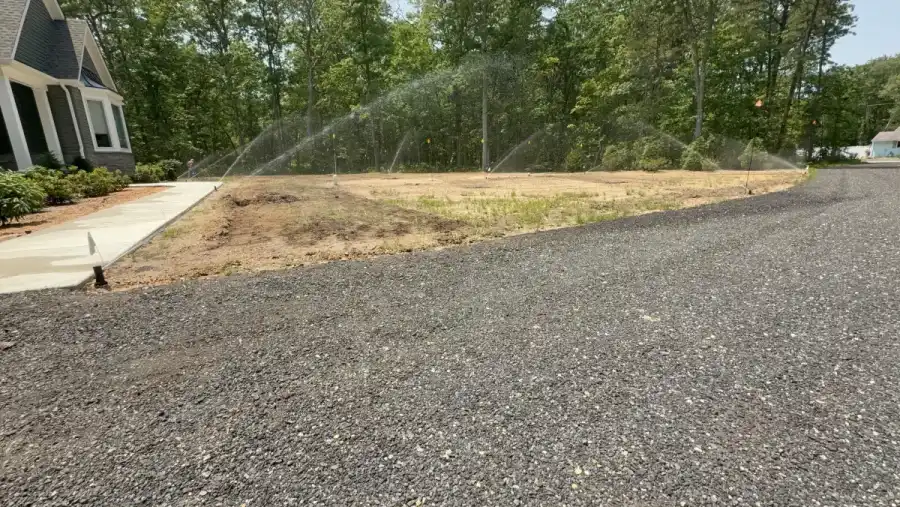
Pipe routes, hardscape crossings, grade, mature roots, gates, and equipment access all affect installation. A newly graded lawn with open access is a different worksite from an established yard with patios, walks, fencing, and finished beds. Ask what surfaces may be disturbed and which cleanup or restoration tasks are included.
Ask for a Base Scope and Clear Alternatives
If the full wish list exceeds the budget, identify a complete base scope first—such as primary turf areas—and price beds, side yards, connected controls, or future expansion separately. That makes tradeoffs visible without disguising a smaller system as the same proposal for less money.
Compare Coverage Before You Compare Totals
Start by confirming that each estimate includes the same areas. Then compare the zone strategy, water-source work, controller, major components, pipe or wire routes, hardscape crossings, testing, homeowner handoff, restoration responsibilities, exclusions, and stated warranty terms.
A low total can reflect fewer watering areas or a different scope. It does not automatically represent a lower price for the same result. The matching sprinkler system installation service page explains how property layout, pressure, sun, shade, turf, planting beds, hardscape, and controller access inform a new system plan.
Plan Installation Around Other Yard Work
The best time to plan a sprinkler system is often before new sod, planting, grading, fencing, a pool, or hardscape work is complete. Sharing those plans early can help keep irrigation routes from conflicting with finished improvements. Ground conditions, project sequence, and seasonal demand matter more than choosing one universal month.
Gloucester County properties range from established neighborhood lots to new construction and larger mixed landscapes. Whatever the setting, the estimate should stay focused on your actual watering areas, access, and water supply. See the Gloucester County irrigation service area for local service paths.
FAQ: Sprinkler Installation Cost
How much does sprinkler installation cost per square foot?
A per-square-foot rate is not a dependable way to price a complete sprinkler system. The same irrigated area can require different zone counts, water-supply work, pipe routes, controls, sprinkler types, and hardscape crossings. Compare a site-specific design and written scope instead.
What is a useful starting range for a residential sprinkler system in New Jersey?
Irrigation Innovations' existing 2026 New Jersey cost guide uses $2,500 to $6,000 as a planning range for many residential installations. It is not a quote; the final amount depends on the actual watering area, system design, water source, access, and site conditions.
How many sprinkler heads are needed for one acre?
Acreage alone cannot determine a head count. Buildings, pavement, beds, wooded edges, slopes, water pressure and flow, sprinkler type, and the area that actually needs irrigation all affect the layout. Head placement should follow the coverage plan rather than an acre-based shortcut.
What is the best time to install a sprinkler system?
The most useful time is often before new sod, planting, grading, a fence, or hardscape changes are completed, because the irrigation routes can be coordinated with the other work. Ground conditions, project sequence, and seasonal demand matter more than choosing one universal month.
What should I compare in two sprinkler installation estimates?
Confirm that both estimates cover the same lawn and planting areas, then compare the zone strategy, water-source work, controls, major components, hardscape crossings, testing, restoration responsibilities, exclusions, and stated warranty terms.