
Summer Watering Schedule for South Jersey Lawns (2026)
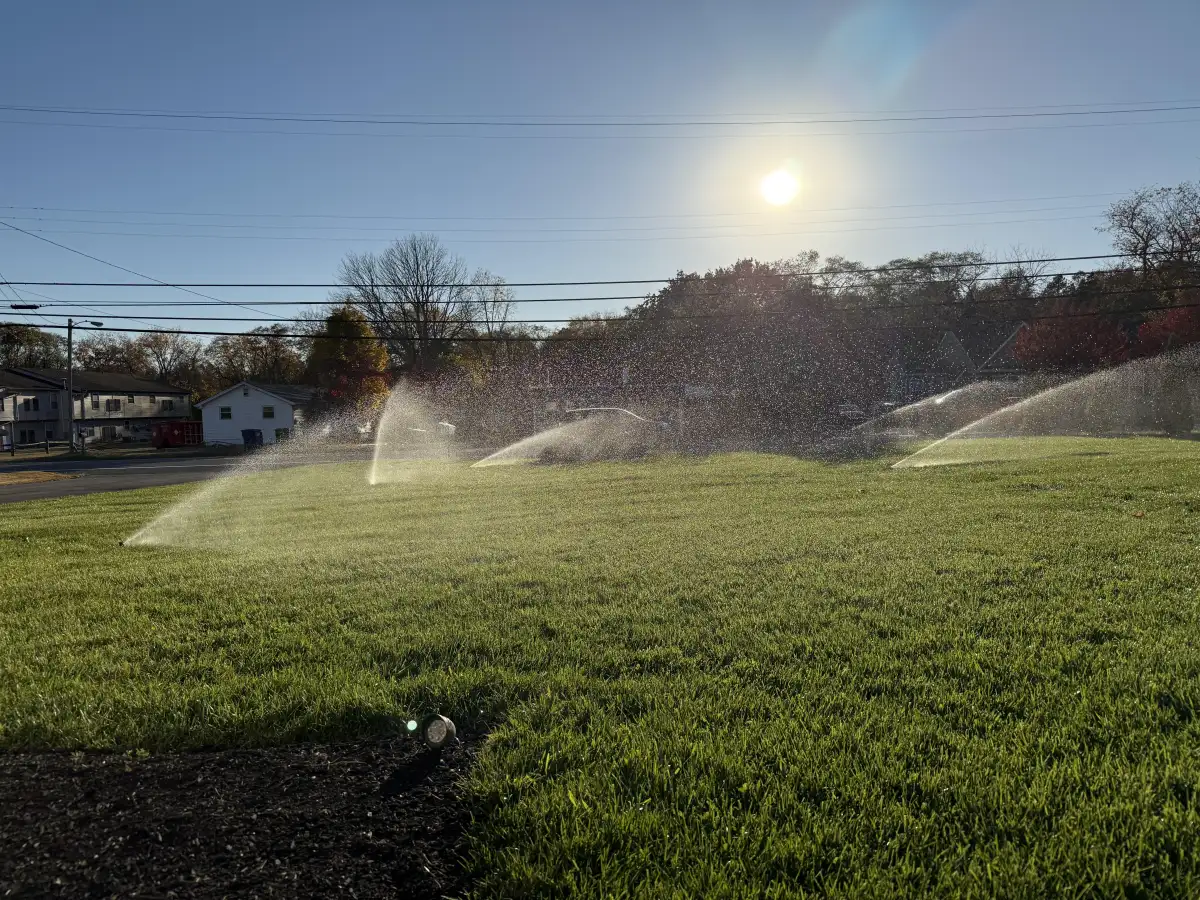
South Jersey lawns need about 1 to 1.5 inches of water per week during summer, delivered in 2 to 3 deep watering sessions rather than daily light sprinkles. Getting this schedule right is the single most important factor in whether your lawn stays green through July and August or burns out by mid-summer. The difference between a thriving lawn and a stressed one usually comes down to how your irrigation controller is programmed, not how much total water you use.
If you completed your spring irrigation checklist and your system is running properly, the next step is adjusting your watering schedule for the heat, humidity, and occasional drought restrictions that define South Jersey summers. This guide covers exactly how to set your controller, what run times to use for different zone types, and how to avoid the most common summer watering mistakes.
Why Your Spring Schedule Will Not Work in Summer
During April and May, cool-season grasses like tall fescue and Kentucky bluegrass are in their peak growth phase. The soil is still holding winter moisture, temperatures are mild, and evaporation rates are low. A schedule of 2 days per week with moderate run times works well.
By mid-June, the situation changes dramatically. Daytime temperatures in Gloucester, Camden, and Burlington counties regularly hit the upper 80s and low 90s. Humidity rises, but so does evapotranspiration, the rate at which water leaves the soil and grass blades through evaporation and plant transpiration. The same amount of water that kept your lawn green in May evaporates before it reaches the root zone in July.
At the same time, cool-season turf grasses start to slow their top growth and shift energy toward root maintenance. Watering too frequently and too shallowly during this period trains roots to stay near the surface, making the lawn even more vulnerable to heat stress. Deep, infrequent watering encourages roots to grow downward into cooler, moister soil layers.
The Ideal Summer Watering Schedule for South Jersey
Here is a baseline summer schedule that works well for most residential properties across our seven-county service area. Adjust based on your specific soil type, sun exposure, and whether you have a smart irrigation controller that can fine-tune automatically.
Frequency: 3 Days Per Week
Water on Monday, Wednesday, and Friday (or Tuesday, Thursday, and Saturday) to space sessions evenly. Three days per week delivers enough moisture for summer without keeping the soil surface constantly wet, which promotes fungal diseases like brown patch and dollar spot that thrive in South Jersey's humid summer conditions.
Avoid daily watering. It sounds counterintuitive, but watering every day actually weakens your lawn over time. Shallow daily runs keep roots in the top inch of soil. When you skip a day due to restrictions or a vacation, those shallow roots dry out immediately.
Run Times by Zone Type
Not all sprinkler heads deliver water at the same rate. Spray heads, rotors, and drip zones each have different precipitation rates, and your run times need to account for this.
- Pop-up spray heads: 15 to 20 minutes per zone. Spray heads deliver water at about 1.5 inches per hour, so 15 to 20 minutes puts down roughly 0.4 to 0.5 inches per session. Over three sessions, that totals 1.2 to 1.5 inches per week.
- Rotor heads: 35 to 45 minutes per zone. Rotors deliver water more slowly, typically 0.5 to 0.7 inches per hour, because they rotate across a larger area. They need the longer run time to match the output of spray zones.
- Drip zones: 45 to 60 minutes per zone. Drip irrigation delivers water very slowly and precisely to the root zone. Longer run times ensure adequate soaking of garden beds, shrub borders, and foundation plantings without runoff.
- MP Rotator nozzles: 30 to 40 minutes per zone. These matched-precipitation nozzles deliver about 0.4 inches per hour and are increasingly common in South Jersey installations. They need more time than standard spray heads but less than traditional rotors.
Start Time: Before 6:00 AM
Program your controller to start the first zone no later than 5:00 AM. The goal is to finish all zones before 8:00 AM, when temperatures rise and wind picks up. Early morning watering gives your lawn several hours to absorb moisture before evaporation accelerates, and it allows grass blades to dry before nightfall.
Evening watering (after 6:00 PM) is the second-best option if early morning is not possible, but it carries a higher risk of fungal disease because grass stays wet overnight. Midday watering is the worst option. Up to 50% of the water applied between 10:00 AM and 4:00 PM can be lost to evaporation, especially on windy days.
Cycle and Soak: Preventing Runoff on South Jersey Soils
Many properties in Gloucester County, Salem County, and parts of Camden County have clay-heavy soils that absorb water slowly. If you run a spray zone for 20 minutes straight on clay soil, the last 5 to 8 minutes of water ends up pooling on the surface and running off into the street or sidewalk. You are paying for water that never reaches the roots.
The solution is cycle and soak programming, a feature available on most modern irrigation controllers including the Hunter Pro-HC and Hydrawise systems we install. Instead of one continuous 20-minute run, the controller breaks it into two 10-minute cycles with a 20-minute soak period in between. The first cycle saturates the soil surface. During the soak period, that water percolates downward. The second cycle pushes moisture deeper into the root zone.
If your controller does not have a built-in cycle and soak feature, you can achieve the same result manually by programming two start times. Set Program A to run at 4:00 AM with half your normal run times, and Program B to run at 5:00 AM with the same half-times on the same zones.
Adjusting for Rain: Do Not Water a Wet Lawn
South Jersey gets an average of 3 to 4 inches of rain per month during summer, though it often arrives in heavy afternoon thunderstorms rather than slow, steady soaks. A 1-inch rainstorm should let you skip at least one watering cycle, possibly two depending on how well your soil retains moisture.
If your system has a rain sensor, verify that it is working correctly at the start of summer. Rain sensors are exposed to direct sun and weather year-round, and the hygroscopic discs inside them degrade over time. A sensor that was accurate two years ago may now take twice as long to trigger or may not respond at all.
Smart controllers like the Hunter Hydrawise go further. They pull local weather data from the nearest weather station and automatically skip or reduce watering based on recent rainfall, current soil moisture estimates, and the forecast for the next 24 to 48 hours. If your system still uses a basic timer-style controller, upgrading to a smart controller typically pays for itself in water savings within two seasons.
New Jersey Water Restrictions: Know Before You Water
New Jersey's statewide water supply plan gives municipalities the authority to impose mandatory watering restrictions during drought conditions. In typical summers, most South Jersey towns allow unrestricted irrigation as long as you follow basic best practices (no watering between 10:00 AM and 4:00 PM, no watering during active rainfall).
During moderate drought declarations, restrictions usually move to an odd-even schedule. Properties with odd-numbered addresses water on odd calendar days, even addresses on even days. During severe drought, restrictions may tighten to 2 days per week on designated days, or in extreme cases, a complete outdoor watering ban.
Gloucester County, Camden County, and Burlington County all fall within the Delaware River Basin Commission's jurisdiction for water allocation. If drought restrictions are declared, the rules apply to automatic irrigation systems as well as manual hose watering. Running your sprinklers during a mandatory restriction can result in fines from your local water utility.
Properties with a dedicated irrigation well are generally exempt from municipal water restrictions because they draw from groundwater rather than the public supply. This is one of the reasons well conversions are popular among South Jersey homeowners who want to maintain their lawns through drought periods without worrying about restrictions or elevated water bills.
Signs Your Schedule Needs Adjustment
Even a well-programmed schedule may need mid-summer tuning. Watch for these indicators:
- Footprinting: Walk across your lawn in the late afternoon. If your footprints stay visible for more than a few seconds (the grass blades do not spring back up), the lawn is water-stressed and needs more irrigation.
- Blue-gray color shift: Grass that is beginning to wilt changes from bright green to a dull blue-gray tone. This is the earliest visible sign of drought stress, and it means you have about 24 to 48 hours to increase watering before the grass starts to go dormant.
- Brown patches in sunny areas only: If shaded zones look fine but full-sun areas are browning, increase run times on the sun-exposed zones by 3 to 5 minutes. South-facing and west-facing zones lose more water to evaporation than north-facing zones on the same property.
- Mushrooms or algae growth: This means the opposite problem. Those zones are getting too much water. Reduce run times or eliminate one watering day per week on affected zones.
- Runoff visible during watering: If water is flowing off the lawn onto hardscape surfaces, your run times are too long for the soil absorption rate. Switch to cycle and soak programming as described above.
Summer Maintenance That Affects Watering Efficiency
Your watering schedule is only as effective as the hardware delivering the water. Several maintenance tasks directly impact how well your system performs during the high-demand summer months.
Check Sprinkler Head Height and Alignment
Heads that have settled below grade or shifted direction waste water and create dry spots. A head that was properly aligned in April may be hitting your fence or house siding by June because landscape growth changed the clearances. Walk each zone once a month during summer and adjust any heads that are not spraying where they should.
Inspect for Leaks Under Pressure
Small leaks that were barely noticeable in spring can become significant under summer operating pressure. A steady drip at a fitting connection or a head that weeps after the zone shuts off means water is being wasted 24 hours a day. Over a full summer, even a slow drip can add hundreds of gallons to your water bill. If you spot a leak, schedule a repair before it gets worse.
Clean Filters and Nozzles
South Jersey's water, whether from municipal supply or a well, carries minerals and fine sediment that accumulate in nozzle screens throughout the season. A partially clogged nozzle reduces output and throws off your entire zone's coverage pattern. Clean the filter screens on spray heads and flush rotor bodies at least once during the summer, ideally in early July before the hottest weeks.
When to Let Your Lawn Go Dormant
During extended heat waves or drought restrictions, cool-season grasses like tall fescue have a survival mechanism: dormancy. The grass turns brown, stops growing, and conserves energy in the crown and root system. It looks dead, but it is not. Once regular watering resumes or fall rains arrive, dormant lawns typically recover within 2 to 3 weeks.
If you choose to let your lawn go dormant during a severe drought, commit fully. The worst thing you can do is alternate between watering and not watering. Brief watering sessions that break dormancy force the plant to use stored energy to push new growth, then the grass has to go dormant again when water stops. This cycle exhausts the root reserves and can actually kill turf that would have survived a full dormancy period.
If you decide to maintain a dormant lawn, apply about 0.5 inches of water every 2 to 3 weeks. This is not enough to green up the lawn, but it keeps the crowns alive and prevents permanent die-off.
Set It Right Now, Save Problems Later
The schedule adjustments described in this guide take about 10 minutes at your controller. Making them now, before the first heat wave hits South Jersey, prevents the scramble of trying to revive a stressed lawn in the middle of July. A properly programmed irrigation system keeps your lawn healthy through the entire summer with less water than an incorrectly programmed one uses just to keep the grass alive.
If you are not sure how to adjust your controller, or if your system has issues that are reducing coverage or wasting water, contact Irrigation Innovations for a mid-season check-up. We service residential and commercial irrigation systems across all seven South Jersey counties, and most adjustments are completed in a single visit.