
Spring Irrigation Checklist: How to Get Your Sprinkler System Ready in South Jersey
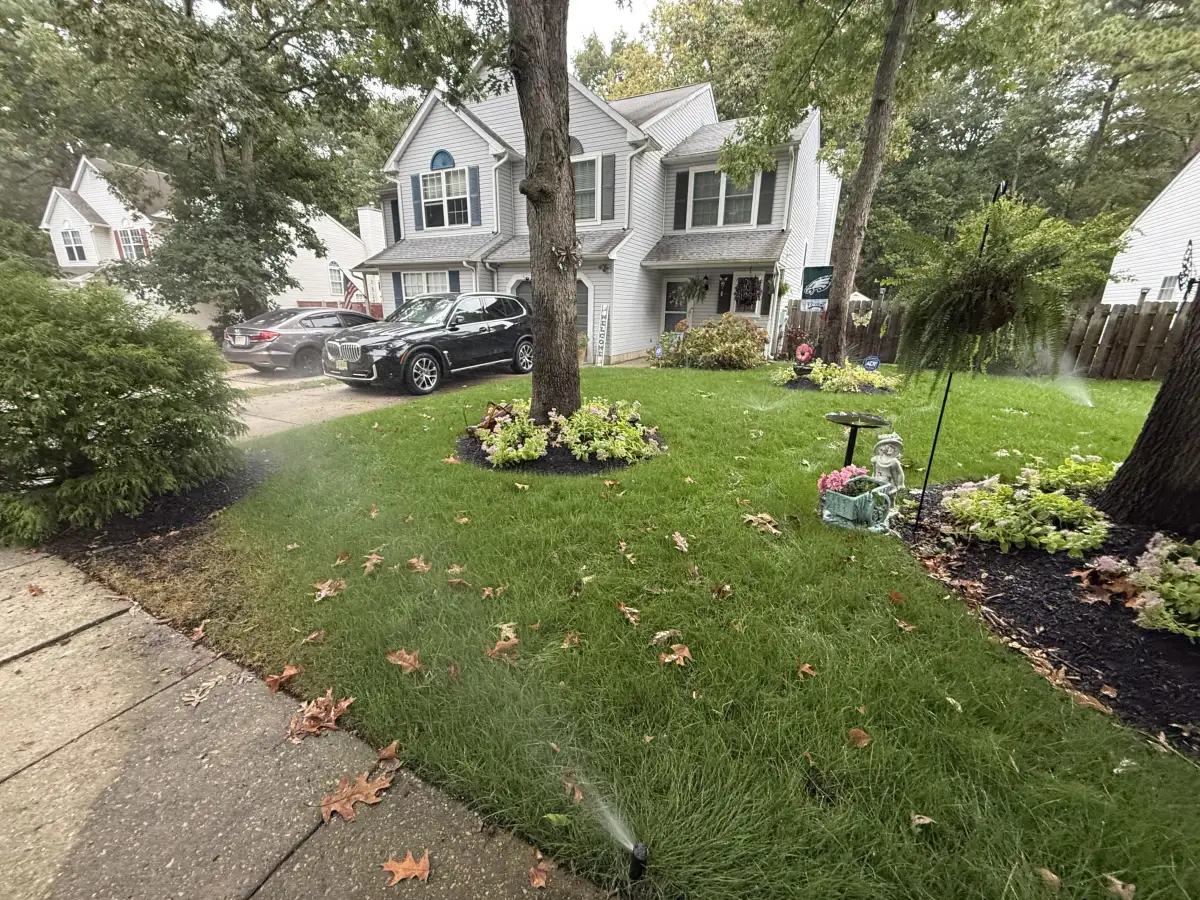
The best time to activate your sprinkler system in South Jersey is late March through mid-April, once overnight temperatures stay consistently above 37 degrees Fahrenheit. If you have not turned your system on yet this spring, now is the time. Waiting too long means your lawn misses critical moisture during the spring growing season, and any winter damage to pipes, heads, or valves goes undetected while it quietly gets worse.
This checklist walks you through the seven steps to get your irrigation system running safely and efficiently after a South Jersey winter. Whether you handle your own spring start-up or hire a professional, understanding these steps helps you protect your investment and catch problems early.
Step 1: Inspect the Backflow Preventer and Main Supply
Before you turn anything on, start at the backflow preventer. This is the device (usually a brass assembly near your house foundation or at the point of connection) that prevents irrigation water from flowing back into your drinking water supply. During winterization, the test cocks and drain ports on the backflow preventer were opened to allow water to escape before freezing.
Here is what to check:
- Close all test cocks and drain ports — These should have been left open after the fall blowout. Close them hand-tight. Do not use pliers or a wrench, as over-tightening can crack the brass fittings.
- Look for visible cracks or damage — Inspect the body of the backflow preventer for hairline cracks, corrosion, or broken handles. Freeze-thaw cycles are the number one cause of backflow preventer failures in Gloucester, Camden, and Burlington counties.
- Verify the supply valve position — The main shutoff valve feeding your irrigation system should still be fully closed from winterization. Confirm it is off before proceeding to any other steps.
Many South Jersey municipalities, including several towns in Gloucester County, require annual backflow preventer testing by a certified tester. Spring is a good time to schedule this test if yours is due.
Step 2: Open the Water Supply Slowly
This is the step where most DIY spring start-ups go wrong. Opening the main water supply valve quickly sends a high-pressure surge through a system full of trapped air. This is called water hammer, and it can crack pipes, blow out fittings, and damage valve diaphragms in seconds.
The correct approach:
- Open the main valve one-quarter turn — Let water trickle into the system slowly. You will hear hissing as air escapes through the highest points in the piping.
- Wait 2-3 minutes — Give the water time to fill the mainline and push air toward the zone valves.
- Open to half, then three-quarters — Increase flow in stages over 5-10 minutes. Listen for banging or hammering sounds, which indicate trapped air pockets.
- Fully open only after the hissing stops — When the system sounds quiet and steady, you can open the valve completely.
If you hear a loud, repetitive banging at any point, close the valve immediately and wait a minute before trying again more slowly. Water hammer is not just noise — it is high-energy pressure waves that cause real physical damage to your pipes and fittings.
Step 3: Run Each Zone Manually and Walk the Property
Do not simply start your automatic schedule and walk away. The goal of this step is to visually inspect every sprinkler head while it is running. Go to your controller and activate one zone at a time using the manual run feature.
For each zone, check the following:
- All heads pop up and retract properly — Heads that stay up or fail to rise are stuck, usually from dirt packed around the riser seal over the winter.
- Spray patterns are correct — Look for heads spraying into the street, sidewalk, house siding, or fence. Realignment takes 30 seconds with a flat-head screwdriver or rotor adjustment tool.
- No geysers or flooding — Water shooting straight up from ground level (instead of from a sprinkler head) indicates a broken head, cracked fitting, or pipe leak underground.
- Even pressure across the zone — If one end of a zone has strong coverage but the other end is weak, you may have a leak pulling pressure away from the far heads.
- Valve boxes are not flooded — Open each valve box lid and look inside. Standing water suggests a slow valve leak or a drainage problem that can cause electrical corrosion on solenoid connections.
This is also the time to note any heads that are buried too low from soil settling, or any new landscape features (garden beds, patios, sheds) that now block a spray pattern. These are common in South Jersey neighborhoods where homeowners make landscape changes over the winter months without realizing the impact on irrigation coverage.
Step 4: Check for Underground Leaks
Underground pipe leaks are the most expensive irrigation problem to ignore. A slow leak may not be obvious when you walk the zones, but it will show up on your water bill every month of the irrigation season.
Here is a simple leak detection test you can do without any special equipment:
- Make sure all indoor water fixtures are off (faucets, washing machine, dishwasher).
- Turn your irrigation system on — run any single zone.
- Go to your water meter and note the reading.
- Shut off the irrigation zone but leave the main irrigation supply valve open.
- Wait 15 minutes with no irrigation zones running and no indoor water use.
- Read the meter again.
If the meter has moved, water is escaping somewhere in your irrigation system even with all zones off. This usually means a leaking valve, a cracked mainline, or a weeping backflow preventer. At this point, you need a professional irrigation diagnosis to locate and fix the leak before the season starts.
Step 5: Clean or Replace Clogged Nozzles and Filters
Mineral buildup, sand, and small debris accumulate in sprinkler nozzles and filter screens over time. After sitting dormant all winter, these deposits harden and restrict water flow. The result is uneven coverage — some heads spray a fine mist while others barely trickle.
For pop-up spray heads:
- Unscrew the nozzle from the top of the head body.
- Remove the filter screen (a small mesh basket underneath the nozzle).
- Rinse both under running water. Use a toothpick to clear any nozzle slots that are clogged.
- Reinstall the filter screen first, then the nozzle.
For rotor heads (the larger heads that rotate back and forth), pull the riser up and unscrew the nozzle from the turret. Flush the body by running the zone briefly with the nozzle removed, then reinstall.
If a nozzle is cracked or so calcified that it will not clean up, replacement nozzles cost a few dollars each at any irrigation supply store. Keeping a bag of common nozzle sizes on hand saves a trip mid-season. South Jersey's water, particularly in Gloucester and Salem counties, has moderate mineral content that accelerates nozzle buildup compared to softer water areas.
Step 6: Program Your Controller for Spring Conditions
Your irrigation controller is probably still set to whatever schedule it had last fall — or it may have reset to factory defaults if it lost power over the winter. Either way, spring watering needs are very different from summer watering needs, and running last year's July schedule in April is one of the most common mistakes South Jersey homeowners make. (When June arrives, you will need to adjust again — see our summer watering schedule guide for the full transition plan.)
Spring Watering Guidelines for South Jersey Lawns
- Frequency: 2-3 days per week in April and May. Cool-season turf grasses (which dominate South Jersey lawns — Kentucky bluegrass, tall fescue, and perennial ryegrass) grow actively in spring and benefit from deep, infrequent watering rather than daily shallow runs.
- Run time: 15-20 minutes per zone for spray heads, 30-40 minutes for rotors. The goal is to deliver approximately 1 inch of water per week total, including rainfall.
- Start time: Between 4:00 AM and 7:00 AM. Early morning watering minimizes evaporation and gives grass blades time to dry before nightfall, which reduces fungal disease pressure.
- Rain sensor: Verify your rain sensor is active and properly calibrated. It should prevent irrigation from running during and for 24-48 hours after significant rainfall. This alone can save 20-30% on irrigation water use.
If you have a smart irrigation controller (like the Hunter Hydrawise systems we install), spring is the time to verify that it is connected to Wi-Fi, receiving weather data for your specific location, and has the correct plant and soil type settings for each zone. A properly configured smart controller adjusts run times automatically based on local weather conditions, evapotranspiration rates, and recent rainfall — eliminating the guesswork entirely.
New Jersey Water Restrictions
South Jersey communities may have local watering ordinances that restrict irrigation to certain days or times of day, particularly during summer drought conditions. While spring restrictions are less common, it is worth checking your township's current regulations before setting your schedule. Most Gloucester County and Camden County towns follow standard odd/even address day restrictions when drought warnings are issued.
Step 7: Document What You Find
This step is the one most homeowners skip, and it is arguably the most valuable for long-term system health. As you walk each zone and check each component, write down (or photograph) what you find:
- Which heads need replacement or adjustment
- Which zones have coverage gaps
- Any signs of leaks, flooding, or pressure issues
- The current condition of your backflow preventer
- Your controller model, current programming, and battery status
When you call for a repair or maintenance visit, having this information ready saves diagnostic time and helps us quote accurately before arriving. It also creates a year-over-year record — if the same zone develops a leak every spring, that pattern tells us the underlying pipe or fitting needs replacement, not just another patch.
When to Call a Professional
Some spring issues are straightforward enough for a handy homeowner to handle: adjusting a spray pattern, cleaning a nozzle, or reprogramming a controller. But certain problems require professional equipment and experience to fix safely:
- Any mainline leak — These are pressurized at all times when the supply is on and can waste hundreds of gallons per hour.
- Backflow preventer damage — Repairs require understanding of cross-connection control codes and often need a certified tester to verify proper operation after the fix.
- Multiple zones with low pressure — This usually points to a problem upstream of the zone valves (mainline, backflow, supply) that requires pressure testing to locate.
- Wiring or controller issues — If zones do not respond from the controller but work when activated manually at the valve, the problem is in the low-voltage wiring or controller board. Wire tracing requires specialized equipment.
- Persistent wet spots with no visible source — Underground lateral line leaks require methodical zone-by-zone pressure testing to isolate.
Irrigation Innovations handles all of these issues for residential and commercial properties across Gloucester, Camden, Burlington, Atlantic, Salem, Cumberland, and Cape May counties. We carry a full parts inventory, and most repairs are completed in a single visit.
The Bottom Line: Do Not Wait Until June
Every week your sprinkler system sits dormant past the ideal start-up window is a week your lawn is missing moisture during its peak spring growth period. It is also another week for that hairline crack in a pipe to shift further apart, or for a stuck valve to corrode into a permanent failure.
South Jersey's spring weather in late April and May provides the ideal conditions for cool-season turf to establish strong root systems before summer heat arrives. Your irrigation system is the tool that makes that happen. Getting it running correctly now — not in June when you notice brown spots — is the difference between a lawn that thrives and one that spends all summer playing catch-up.
If your system has not been activated yet this spring, or if you ran through this checklist and found problems you cannot fix, contact Irrigation Innovations to schedule a professional spring start-up. We serve all seven South Jersey counties and our schedule fills quickly during peak spring weeks.