
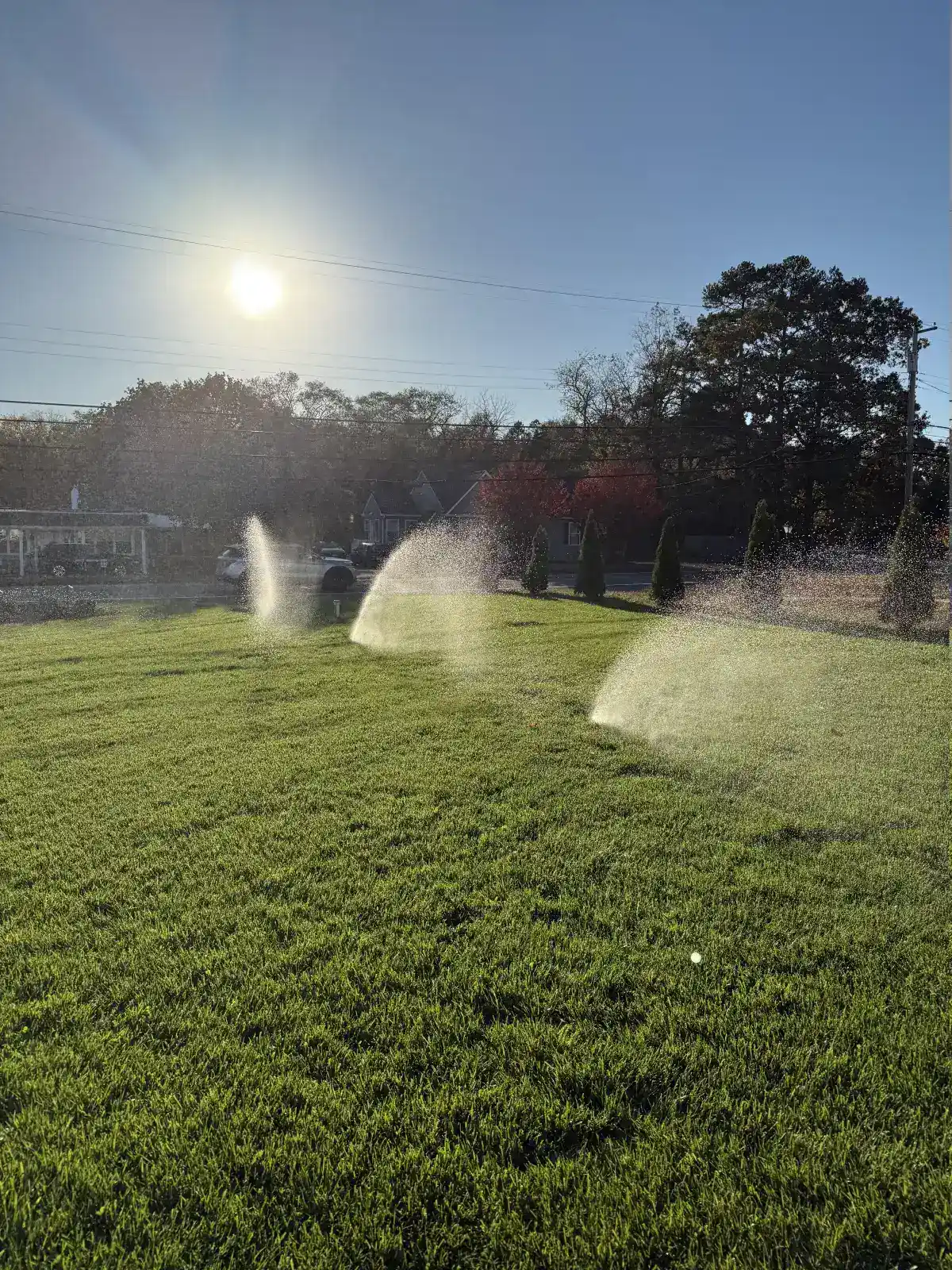
Dripline delivers water directly to the root zone through low-pressure tubing buried under mulch. Sprinkler heads spray water over an area from above. Both work, but they solve different problems -- and choosing the wrong one wastes water and money.
Here is how each system performs for the types of plantings South Jersey homeowners care about most, along with real cost comparisons to help you decide.
How Dripline Works
Dripline (also called drip irrigation or drip tubing) uses flexible polyethylene tubing with built-in emitters spaced every 12 or 18 inches. Water seeps out slowly at low pressure (typically 25 to 30 PSI), soaking directly into the soil around plant roots.
The tubing is laid in rows through garden beds, around shrubs, and along foundation plantings. It sits on the soil surface under mulch, where it stays hidden and protected from UV damage. A pressure regulator and filter connect the drip zone to your main irrigation valve.
How Traditional Sprinklers Work
Spray heads and rotary nozzles distribute water in a pattern from above, covering an area of 4 to 30 feet depending on the head type. Sprinkler systems operate at 30 to 60 PSI and apply water to everything within their spray radius -- plants, mulch, walkways, and air.
Side-by-Side Comparison
| Factor | Dripline | Sprinklers |
|---|---|---|
| Water efficiency | 90-95% efficient | 50-70% efficient |
| Best for | Beds, shrubs, trees, vegetables | Lawns, large open areas |
| Install cost per zone | $500-$1,500 | $400-$800 |
| Water savings | 30-50% less water | Baseline |
| Weed reduction | Significant (waters only plant zones) | None (waters entire area) |
| Disease risk | Lower (no wet foliage) | Higher (wet leaves promote fungus) |
| Maintenance | Filter cleaning, emitter checks | Head adjustment, nozzle replacement |
When Dripline Is the Better Choice
Dripline outperforms sprinklers in these situations:
- Flower beds and perennial gardens: Water goes to the roots, not the petals. This reduces disease and keeps blooms looking better longer.
- Foundation plantings: Dripline keeps water away from your foundation wall while still reaching shrub root zones.
- Vegetable gardens: Tomatoes, peppers, and most vegetables prefer consistent root-zone moisture without wet foliage.
- Slopes and hillsides: Drip applies water slowly enough that it soaks in before running off. Sprinklers on slopes waste 30 to 50 percent of their water to runoff.
- Narrow beds along walkways and driveways: No overspray onto hardscape surfaces.
When Sprinklers Are the Better Choice
Traditional sprinklers still win for these applications:
- Lawn areas: Turf grass needs even coverage across large, flat areas. Sprinklers are designed for this.
- Large ground cover areas: Wide beds of pachysandra, vinca, or other ground cover are more cost-effective to water with sprinklers.
- Annual flower beds that change seasonally: If you replant beds frequently, sprinklers avoid the hassle of repositioning drip tubing each time.
The Best Approach: Use Both
Most well-designed irrigation systems in Gloucester County, Camden County, and across South Jersey use both dripline and sprinklers. Spray zones handle the lawn. Drip zones handle the beds, shrubs, and gardens.
A smart irrigation controller manages both types on separate programs -- lawn zones run every other day in summer while drip zones run daily for shorter durations. This gives each type of planting exactly what it needs without over- or under-watering anything.
Installation and Cost Details
Adding dripline to an existing sprinkler system is straightforward. We tap into an open zone on your existing valve manifold (or add a new valve) and run drip tubing through the beds. Most residential dripline additions take half a day to install.
Typical costs in South Jersey:
- Single garden bed zone: $500 to $900
- Full foundation planting package (3-5 zones): $1,500 to $4,000
- Vegetable garden zone: $300 to $700
- Pressure regulator and filter (per zone): included in installation cost
Compare that to a new sprinkler installation, which runs $2,500 to $6,000 for a full system.
Maintenance Differences
Dripline requires different maintenance than sprinklers. The filter needs cleaning two to three times per growing season. Emitters should be checked annually for clogs, especially in areas with hard water. Mulch sometimes shifts and covers emitter outlets -- a quick adjustment during spring cleanup fixes this.
Both dripline and sprinkler zones need winterization before the first hard freeze. The compressed air blowout pushes water out of drip tubing just like spray lines. Skipping winterization on drip zones causes the same freeze damage as leaving sprinkler pipes full.
Frequently Asked Questions
How much does dripline installation cost in South Jersey?
Professional dripline installation in South Jersey typically costs $1.50 to $3.50 per linear foot of tubing, or $500 to $1,500 per zone. A typical residential property with 3 to 5 garden bed zones runs $1,500 to $4,000 fully installed. This is often less expensive than adding new sprinkler zones for the same areas.
Can I add dripline to my existing sprinkler system?
Yes. Dripline zones can be added to most existing sprinkler systems by tapping into an existing valve manifold or adding a new zone. A pressure regulator and filter are installed between the valve and the drip tubing to reduce pressure from the typical 40-60 PSI sprinkler line to the 25-30 PSI that drip systems need.
How much water does dripline save compared to sprinklers?
Dripline systems typically use 30 to 50 percent less water than traditional sprinkler heads for the same planting area. The savings come from eliminating overspray, reducing evaporation by delivering water directly to the root zone, and avoiding runoff on slopes and compacted soil.
Does dripline need to be winterized in New Jersey?
Yes. Dripline must be winterized alongside your sprinkler system to prevent freeze damage. The winterization blowout pushes compressed air through drip zones just like spray zones. Buried dripline is somewhat protected, but any above-ground components and connections can crack if water is left inside.
Ready to Add Dripline to Your Property?
If your garden beds, shrubs, or vegetables are either getting too much water from overspray or not enough because the sprinklers do not reach them, dripline is the solution. We install drip irrigation across all seven South Jersey counties we serve.